Reaction equation

[CH3:1][C:2]1([CH3:13])[C:11]2[C:6](=[CH:7][CH:8]=[CH:9][CH:10]=2)[C:5](=O)[CH2:4][CH2:3]1.[Li][C:15]([CH3:18])([CH3:17])[CH3:16].O=S(Cl)Cl.[CH3:23][CH2:24][O:25]CC>>[CH3:1][C:2]1([CH3:13])[C:11]2[C:6](=[CH:7][CH:8]=[C:9]([C:24](=[O:25])[CH3:23])[CH:10]=2)[C:5]([C:15]([CH3:18])([CH3:17])[CH3:16])=[CH:4][CH2:3]1Participants
5


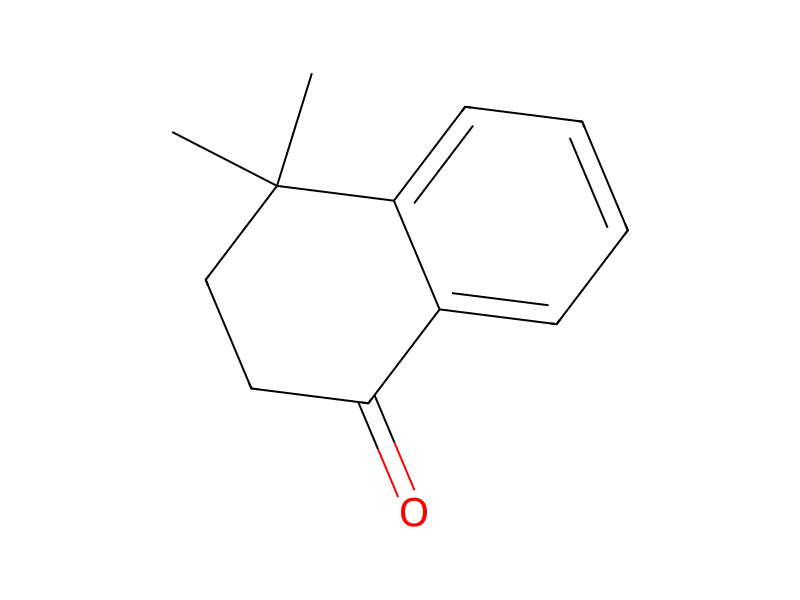


Conditions
- Temperature
- -78 °C
Procedure
To a solution of 6-(2-methyl-1,3-dioxolan-2-yl)!-3,4-dihydro-4,4-dimethylnaphthlen-1(2H)-one ((Compound D15, 353 mg, 1.36 mmol) in 3 ml of dry ether at -78° C. was added dropwise t-BuLi (1 ml, 1.7 mmol, 1.7M solution in pentane). This dear light yellow solution was left at -78° C. for 30 min. Then, fleshly distilled SOCl2 (0.15 ml, 2.0 mmol) was added. The reaction mixture was stirred at -78° C. for additional 30 min and thereafter slowly warmed to room temperature. The reaction was quenched by addition of saturated NH4Cl. The white solids were removed by filtration and the clear solution was concentrated to an oil, and purified by column chromatography with ethyl acetate/hexane (1/10) to give the title compound as a yellow oil.
Workup
- temperatureslowly warmed to room temperature
- customThe reaction was quenched by addition of saturated NH4Cl
- customThe white solids were removed by filtration
- concentrationthe clear solution was concentrated to an oil
- custompurified by column chromatography with ethyl acetate/hexane (1/10)
Sources & evidence
- ORD record
- ord-130b3a00a9dc43f5a473799157e45ada
- Source dataset
- uspto-grants-1998_03
- Patent number
- US05723666
Linked notes
Loading…