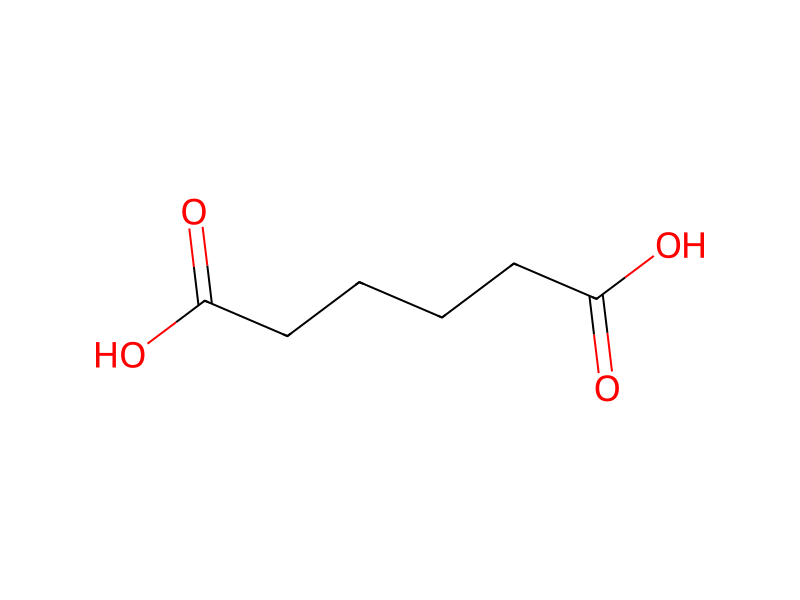
109 Parts of finely ground 6-chloro-2,4-dinitro-aniline together with 73 parts of adipic acid, 10 parts of a commercial-type nickel catalyst (about 50% Ni on kieselguhr) and 500 parts by volume of water charged into a hydrogenation autoclave equipped with a double-acting, magnetically operated agitator. After the autoclave had been sealed, air was expelled from the free volume by passing nitrogen over it (for 15 minutes). Heating and agitator were then put to work, 120 atmsg. of hydrogen were forced in under pressure, and hydrogenation was effected. Hydrogen absorption started at about 60° C., and was complete within about 2 hours at a maximum temperature of 95° C. Evidence for 6-chloro-1,2,4-triamino-benzene obtained was provided by releasing the residual hydrogen, freeing the mixture from the catalyst by filtration through a pressure filter under a nitrogen pressure of 20 atmsg. and passing the filtrate into another stirrer-equipped vessel which contained 150 parts of urea. The mixture was then refluxed for 5 hours while maintaining the pH at 4 - 5 by adding a total of about 112 parts of sulfuric acid monohydrate. The ph was then adjusted to 6 by means of 54 parts of a 33% sodium hydroxide solution, and the mixture was cooled to room temperature. About 90 parts of a compound were obtained, which has a melting point of 341° C. and whose analytical data for C, H, Cl and N corresponded to the calculated values for the urea compound of the formula