HomeMCPSkillsWorkbenchOpenChem
HomeWorkbenchNotificationsMe
llms.txt · skill.md · MCP GuidePrivacy Policy · Terms of Service · Supportv1.8.5
  1. Home
  2. /Reaction

Cesium carbonate → tert-Butyl 4-(3,4-dinitrophenyl)piperazine-1-carboxylate

HRID 1397895
Print

Reaction equation

[C:1]([N:8]1[CH2:13][CH2:12][NH:11][CH2:10][CH2:9]1)([O:3][C:4]([CH3:7])([CH3:6])[CH3:5])=[O:2].C([O-])([O-])=O.[Cs+].[Cs+].C1(P(C2C=CC=CC=2)C2C=CC3C(=CC=CC=3)C=2C2C3C(=CC=CC=3)C=CC=2P(C2C=CC=CC=2)C2C=CC=CC=2)C=CC=CC=1.Br[C:67]1[CH:72]=[CH:71][C:70]([N+:73]([O-:75])=[O:74])=[C:69]([N+:76]([O-:78])=[O:77])[CH:68]=1>C1C=CC(/C=C/C(/C=C/C2C=CC=CC=2)=O)=CC=1.C1C=CC(/C=C/C(/C=C/C2C=CC=CC=2)=O)=CC=1.C1C=CC(/C=C/C(/C=C/C2C=CC=CC=2)=O)=CC=1.[Pd].[Pd].C1(C)C=CC=CC=1>[N+:73]([C:70]1[CH:71]=[C:72]([N:11]2[CH2:10][CH2:9][N:8]([C:1]([O:3][C:4]([CH3:7])([CH3:6])[CH3:5])=[O:2])[CH2:13][CH2:12]2)[CH:67]=[CH:68][C:69]=1[N+:76]([O-:78])=[O:77])([O-:75])=[O:74]
ParticipantsProcedureWorkupSources & evidenceReaction notes

Participants

7

Reactant 4

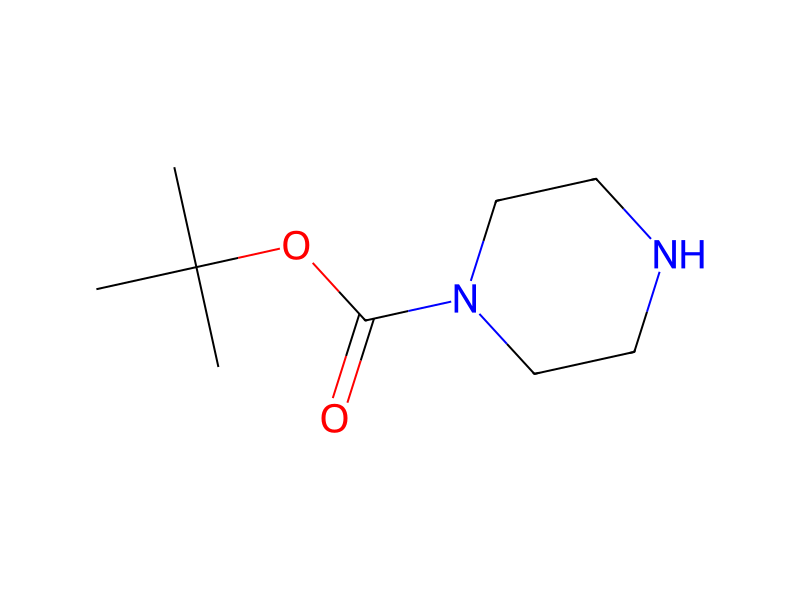
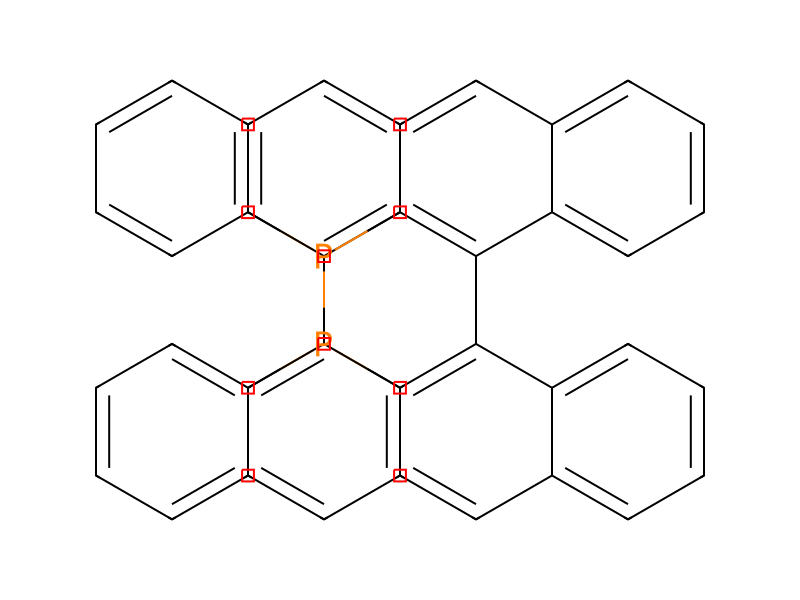
HCID 10796Cesium carbonateHCID 611524-Bromo-1,2-dinitrobenzeneHCID 143452tert-Butyl piperazine-1-carboxylateHCID 634876Binap, (A+-)-

Product 1

HCID 117722365tert-Butyl 4-(3,4-dinitrophenyl)piperazine-1-carboxylateYield 78%

Reagents, catalysts & solvents 2

HCID 9811564Bis(dibenzylideneacetone)palladiumCatalystHCID 1140TolueneSolvent

Procedure

To an oven-dried flask, 1-boc-piperazine (1.59 g, 8.5 mmol), Cs2CO3 (2.91 g, 8.93 mmol), Pd2(dba)3 (0.72 g, 0.78 mmol), rac-2,2′bis(diphenylphosphino)-1,1′-binaphthyl (0.44 g, 0.71 mmol), toluene (6 mL) and compound 24 (1.76 g, 7.14 mmol) were added. While stirring the reaction mixture at room temperature, the air in the flask was removed and replaced by N2. This process was repeated three times. The reaction mixture was further stirred at room temperature for 0.5 h. Ethyl acetate (50 mL) was added to the mixture at room temperature, washed with H2O (15 mL) and brine (10 mL), dried over Na2SO4, and evaporated. The brown oily material was chromatographed on a silica column, eluting with hexanes:ethyl acetate (30:70), and then changing to (40:60), yielding compound 25. Yield: 78%, yellow solid. IR (KBr, cm−1) 3073 (Ar—H), 1683 (CO), 1528, 1432 (C═C), 1226 (C—N), 1151 (C-0); 1H NMR (500 MHz, CDCl3) δ 1.48 (9H, s, OC(CH3)3), 3.02 (m, 4H, 2CH2), 3.58 (m, 4H, 2CH2), 7.17 (dd, J=2.6, 8.8 Hz, 1H, H-6), 7.24 (d, J=2.5 Hz, 1H, H-2), 7.71 (d, J=8.5 Hz, 1H, H-4). 13C NMR (125.7 MHz, CDCl3) δ 28.30 (OC(CH3)3), 48.24 (CH2), 51.39 (CH2), 80.12 (OC(CH3)3), 124.23 (C-2), 124.92 (C-6), 127.49 (C-5), 128.17 (C-4), 141.62 (C-3), 146.94 (C-1), 154.60 (CO). Anal. Calcd for C15H20N4O6: C, 51.13; 11, 5.72; N, 15.90%. Found: C, 51.07; H, 5.78; N, 15.82%.

Workup

  1. customthe air in the flask was removed
  2. stirringThe reaction mixture was further stirred at room temperature for 0.5 h
  3. additionEthyl acetate (50 mL) was added to the mixture at room temperature
  4. washwashed with H2O (15 mL) and brine (10 mL)
  5. dry with materialdried over Na2SO4
  6. customevaporated
  7. customThe brown oily material was chromatographed on a silica column
  8. washeluting with hexanes:ethyl acetate (30:70)

Sources & evidence

ORD record
ord-92f4ed54e2a24499a5a008ead867859d
Source dataset
uspto-grants-2014_12
DOI
10.6084/m9.figshare.5104873.v1
Patent number
US08901304B1

Reaction notes

On this pageParticipantsProcedureWorkupSources & evidenceReaction notes