Reaction equation

[F:1][C:2]1[C:3](=[O:9])[NH:4][C:5](=[O:8])[NH:6][CH:7]=1.[O:10]1[CH:14]=[CH:13][CH2:12][CH2:11]1>N1C=CC=CC=1>[O:10]1[CH2:11][CH2:12][CH2:13][CH:14]1[N:6]1[CH:7]=[C:2]([F:1])[C:3](=[O:9])[N:4]([CH:11]2[CH2:12][CH2:13][CH2:14][O:10]2)[C:5]1=[O:8]Participants
4
Reactant 2

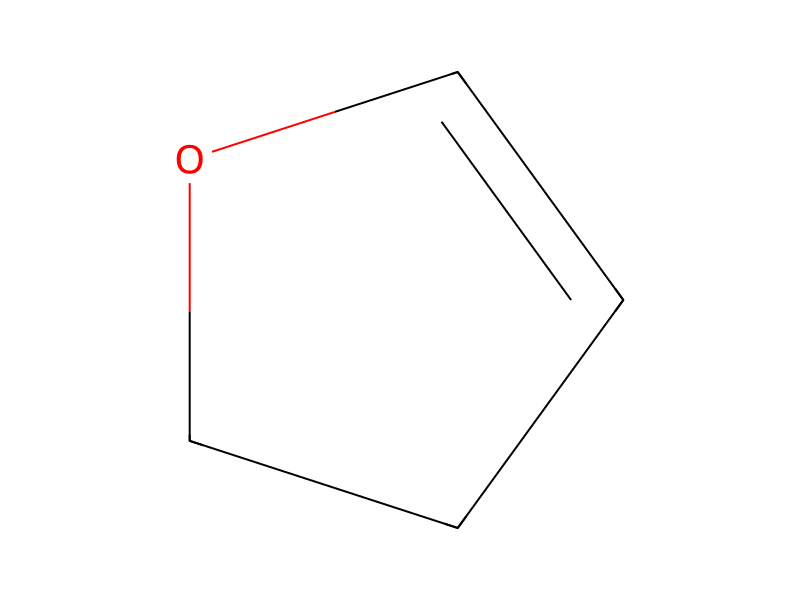
Product 1

Reagents, catalysts & solvents 1

Conditions
- Temperature
- 150 °C
Procedure
In 20.8 ml of pyridine were dissolved 5.2 g (40 m mol) of 5-fluorouracil and 14 g (200 m mol) of 2,3-dihydrofuran. The solution were heated at about 150° C. in a closed tubular reactor under agitation for 6 hours. After the reaction, the reaction mixture was concentrated to dryness under reduced pressure. The residue was dissolved in chloroform and the solution was passed through a column of silica gel. The column was eluated with chloroform and the effluent was concentrated to dryness under reduced pressure. The residue was washed with a small amount of petroleum ether to give the above-mentioned compound as colorless crystals.
Workup
- customAfter the reaction
- concentrationthe reaction mixture was concentrated to dryness under reduced pressure
- dissolutionThe residue was dissolved in chloroform
- concentrationthe effluent was concentrated to dryness under reduced pressure
- washThe residue was washed with a small amount of petroleum ether
Sources & evidence
- ORD record
- ord-2992a554a28e4ff7a9ce0121c7aa404d
- Source dataset
- uspto-grants-1981_02
- Patent number
- US04249006
Linked notes
Loading…