1,3-Diethyl 2-oxopropanedioate → Ethyl 6,7-dichloro-3-hydroxyquinoxaline-2-carboxylate
HRID 1414078
Reaction equation

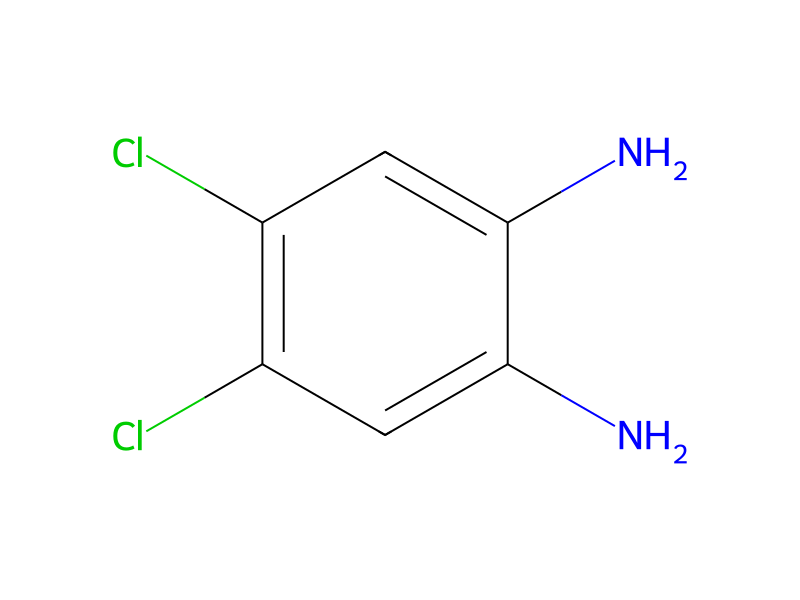
[Cl:1][C:2]1[C:7]([Cl:8])=[CH:6][C:5]([NH2:9])=[C:4]([NH2:10])[CH:3]=1.O=[C:12]([C:18](OCC)=[O:19])[C:13]([O:15][CH2:16][CH3:17])=[O:14]>C(O)C>[Cl:1][C:2]1[CH:3]=[C:4]2[C:5](=[CH:6][C:7]=1[Cl:8])[N:9]=[C:12]([C:13]([O:15][CH2:16][CH3:17])=[O:14])[C:18](=[O:19])[NH:10]2Participants
4
Reactant 2

Product 1

Reagents, catalysts & solvents 1

Procedure
A solution of 17.7 g. of 4,5-dichloro-o-phenylenediamine and 200 ml. of anhydrous ethanol was prepared. A 17.4 g. batch of diethyl 2-keto-malonate was added to this solution and the mixture was heated to refluxing temperature for about 17 hours. The volatile constituents were removed by evaporation in vacuo. Recrystallization of the residue from ethanol yielded 20 g. of ethyl 6,7-dichloro-3,4-dihydro-3-oxo-2-quinoxaline carboxylate formed in the above reaction; melting in the range 226°-227° C.