HomeMCPWorkbenchSkills
HomeWorkbenchNotificationsMe
llms.txt · MCP GuidePrivacy Policy · Terms of Service · Supportv1.8.0
  1. Home
  2. /Reaction

Methanol → N'-(4-((2-chloro-6-methyl-4-pyrimidinyl)oxy)-phenyl)-N,N-dimethylurea

HRID 1414216
Notes
Print preview

Reaction equation

HRID 1414216 reaction equation
C[O-].[Na+].CO.[OH:6][C:7]1[CH:12]=[CH:11][C:10]([NH:13][C:14](=[O:18])[N:15]([CH3:17])[CH3:16])=[CH:9][CH:8]=1.[Na].[Cl:20][C:21]1[N:26]=[C:25](Cl)[CH:24]=[C:23]([CH3:28])[N:22]=1>CS(C)=O>[Cl:20][C:21]1[N:26]=[C:25]([O:6][C:7]2[CH:8]=[CH:9][C:10]([NH:13][C:14](=[O:18])[N:15]([CH3:16])[CH3:17])=[CH:11][CH:12]=2)[CH:24]=[C:23]([CH3:28])[N:22]=1
ParticipantsProcedureWorkupSources & evidenceReaction notes

Participants

6

Reactant 4

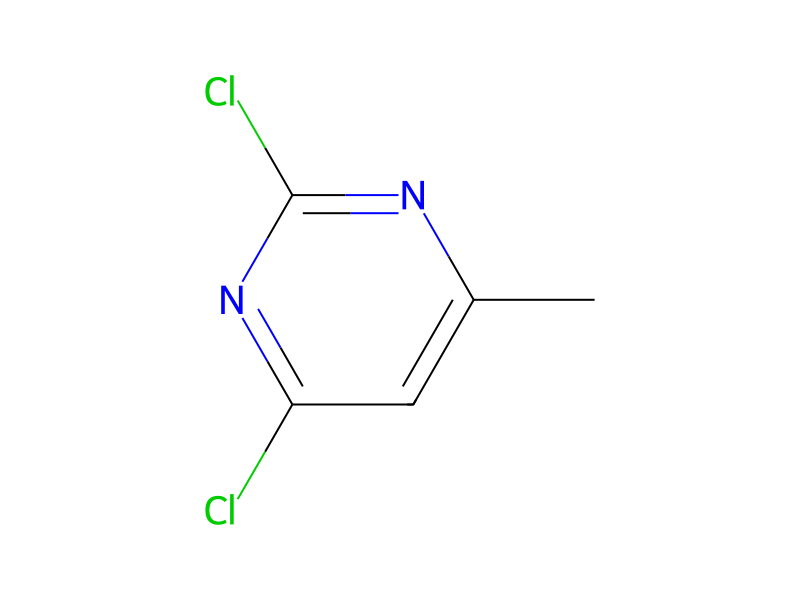
HCID 887MethanolHCID 794712,4-Dichloro-6-methylpyrimidineHCID 10942334Sodium MethoxideHCID 68122779sodium 4-hydroxyphenyl-N,N-dimethylurea

Product 1

HCID 21486801N'-(4-((2-chloro-6-methyl-4-pyrimidinyl)oxy)-phenyl)-N,N-dimethylurea

Reagents, catalysts & solvents 1

HCID 679
Dimethyl Sulfoxide
Solvent

Procedure

4-Hydroxyphenyl-N,n-dimethylurea (14.4 grams; 0.08 mole) was mixed with a solution of sodium methylate (prepared by mixing sodium metal (1.84 grams) in 50 milliliters (ml) of methanol) and the resulting sodium 4-hydroxyphenyl-N,N-dimethylurea solution added gradually over a period of about one hour to a solution of 2,4-dichloro-6-methylpyrimidine (13.04 grams; 0.08 mole) in 70 ml. of dimethylsulfoxide. During the addition, the reaction temperature rose from about 52°C. to a temperature from between about 60° to about 65°C. The resulting reaction mixture was maintained at temperatures from between about 60° to about 70°C. for a period of about 80 minutes. Following the reaction period, the reaction mixture was poured into about 400 ml. of cold water and the resulting tan product precipitate recovered by filtration and washed with additional portions of water. The product precipitate was dissolved in boiling benzene and the resulting solution treated with activated charcoal. Approximately one-half of the solvent was removed by evaporation and the remaining portion was cooled to crystallize the product. As a result of these operations, the desired title product was obtained as a light tan crystalline solid having a melting point of 176°-178°C.


Workup

  1. additionDuring the addition
  2. customrose from about 52°C. to a temperature from between about 60° to about 65°C
  3. customThe resulting reaction mixture
  4. temperaturewas maintained at temperatures from between about 60° to about 70°C. for a period of about 80 minutes
  5. customthe reaction period
  6. additionthe reaction mixture was poured into about 400 ml
  7. filtrationof cold water and the resulting tan product precipitate recovered by filtration
  8. washwashed with additional portions of water
  9. dissolutionThe product precipitate was dissolved
  10. additionthe resulting solution treated with activated charcoal
  11. customApproximately one-half of the solvent was removed by evaporation
  12. temperaturethe remaining portion was cooled
  13. customto crystallize the product
  14. customAs a result of these operations

Sources & evidence

ORD record
ord-b2162903d14b4cb4bd6d8cf4b6349547
Source dataset
uspto-grants-1977_01
DOI
10.6084/m9.figshare.5104873.v1
Patent number
US04001234

Reaction notes

Loading…

On this pageParticipantsProcedureWorkupSources & evidenceReaction notes