Water → 4-Chloro-5-(1-methylhydrazino)-2-phenyl-3(2H)-pyridazinone
HRID 1414873
Reaction equation

[Cl:1][C:2]1[C:3](=[O:15])[N:4]([C:9]2[CH:14]=[CH:13][CH:12]=[CH:11][CH:10]=2)[N:5]=[CH:6][C:7]=1Cl.[CH3:16][NH:17][NH2:18].O>CO>[Cl:1][C:2]1[C:3](=[O:15])[N:4]([C:9]2[CH:14]=[CH:13][CH:12]=[CH:11][CH:10]=2)[N:5]=[CH:6][C:7]=1[N:17]([CH3:16])[NH2:18]Participants
5
Reactant 3

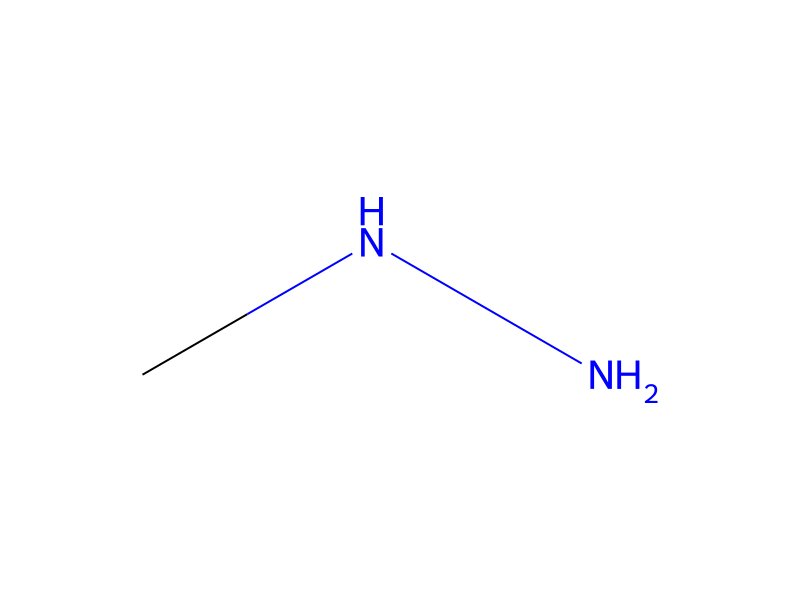

Product 1

Reagents, catalysts & solvents 1

Procedure
To a solution consisting of 22.9 grams of 4,5-dichloro-2-phenylpyridazin-3(2H)-one in 120 grams of methanol is added 20 grams of methylhydrazine. The reactants are heated to reflux for two hours, cooled and poured into one kilogram of water. The resulting precipitate is separated by filtration, washed with water and dried. The solid is crystallized from benzene and methanol to yield 4-chloro-2-phenyl-5-(1-methylhydrazino)-pyridazine-3(2H)-one (m.p. 128° to 130° C with decomposition).