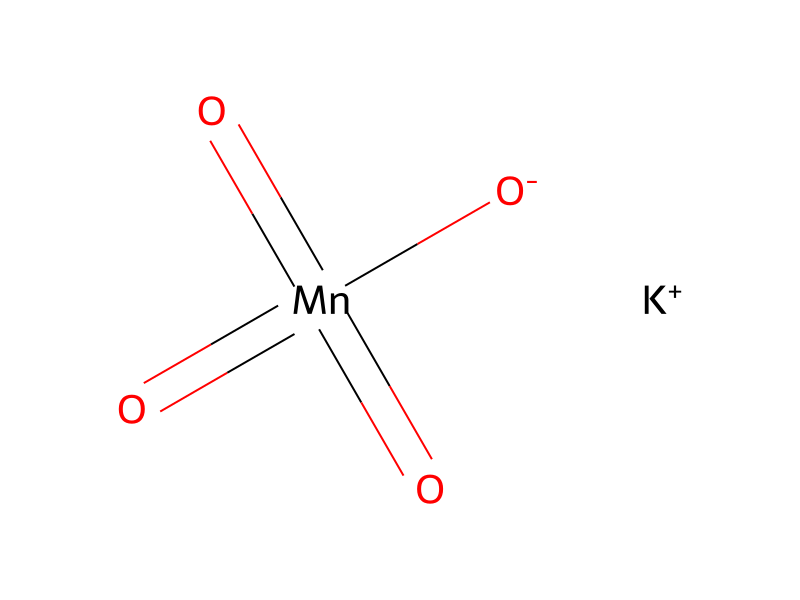
2-Ethyl-5-methoxy-6,7-dichloro-1-indanone (4 g.) is suspended in 200 ml. of water containing 1 ml. of 20% sodium hydroxide. The mixture is heated to boiling and potassium permanganate (18 g.) is added portion-wise over a four-hour period in such a manner that each time the purple color disappears an additional portion is added. A few drops of methanol are added to destroy the excess permanganate and the manganese oxide is removed by filtration. The colorless filtrate is acidified with 6 N HCl and evaporated to dryness under reduced pressure. The solid residue is extracted with boiling acetone and the extract is evaporated to dryness. The residue (2.57 g.) is suspended in 6 N HCl (125 ml.) and the mixture is boiled for 10 minutes, cooled and the 3,4-dichloro-5-methoxyphthalic acid is collected. On heating the product in a capillary melting point tube, it evolves a gas at 210° C. (formation of the anhdride), resolidifies and melts at 218°-220° C.