HomeMCPWorkbenchSkills
HomeWorkbenchNotificationsMe
llms.txt · MCP GuidePrivacy Policy · Terms of Service · Supportv1.8.3
  1. Home
  2. /Reaction

Methyl chloroacetate → 2-Azido-3-[3-(2-chloroethoxy)-4-methoxyphenyl]acrylic acid methyl ester

HRID 1430340
Print

Reaction equation

HRID 1430340 reaction equation
[N-:1]=[N+:2]=[N-:3].[Na+].Cl[CH2:6][C:7]([O:9][CH3:10])=[O:8].[Cl:11][CH2:12][CH2:13][O:14][C:15]1[CH:16]=[C:17]([CH:20]=[CH:21][C:22]=1[O:23][CH3:24])[CH:18]=O.C[O-].[Na+].CO>CS(C)=O.CO.O>[CH3:10][O:9][C:7](=[O:8])[C:6]([N:1]=[N+:2]=[N-:3])=[CH:18][C:17]1[CH:20]=[CH:21][C:22]([O:23][CH3:24])=[C:15]([O:14][CH2:13][CH2:12][Cl:11])[CH:16]=1
ParticipantsProcedureWorkupSources & evidenceReaction notes

Participants

8

Reactant 4

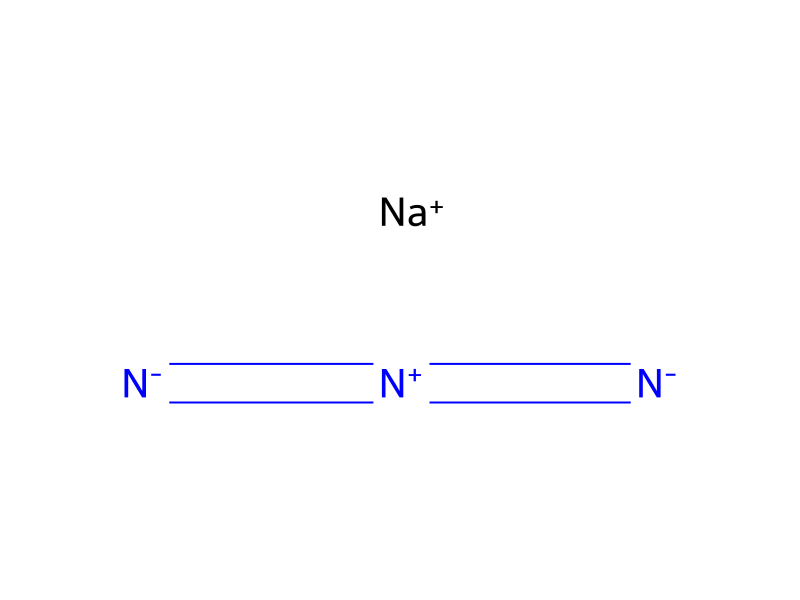
HCID 7295Methyl chloroacetateHCID 33557Sodium AzideHCID 11708318HCID 11708318, compoundHCID 23694274Sodium methanolate methanol

Product 1

HCID 730356842-Azido-3-[3-(2-chloroethoxy)-4-methoxyphenyl]acrylic acid methyl esterYield 88%

Reagents, catalysts & solvents 3

HCID 679
Dimethyl Sulfoxide
Solvent
HCID 887MethanolSolvent2×
HCID 962WaterSolvent2×

Procedure

NaN3 (22.2 g, 341 mmol) was added slowly to a solution of methyl chloroacetate (20.0 mL, 227 mmol) in DMSO (100 mL). After stirring at room temperature for 24 h, water (150 mL) was added and the mixture was extracted with Et2O (3×100 mL). The combined organic fractions were dried (MgSO4) and concentrated in vacuo to 50 mL. Then, a solution of aldehyde 15 (5.37 g, 25.0 mmol) in MeOH (50 mL) was added and the mixture was cooled to −30° C. After that, the reaction mixture was treated with 5.4 M NaOMe/MeOH (35.0 mL, 189 mmol) within 30 min at −30° C., warmed to 0° C. and diluted with MeOH (50 mL). After stirring for 16 h at 0° C., water (200 mL) was added and the mixture was extracted with CH2Cl2 (3×200 mL). The combined organic fractions were washed with brine (200 mL), dried (MgSO4), and the solvent was removed in vacuo to give 16 (6.84 g, 88% from 15) as a pale yellow solid that was used for the next step without further purification. 1H NMR (300 MHz, CDCl3): δ=3.84 (t, J=6.1 Hz, 2 H, 2″-H2), 3.87, 3.88 (2×s, 6 H, OMe, CO2Me), 4.29 (t, J=6.1 Hz, 2 H, 1″-H2), 6.83 (s, 1 H, 1′-H), 6.87 (d, J=8.5 Hz, 1 H, 5-H), 7.36 (dd, J=8.5, 2.1 Hz, 1 H, 6-H), 7.53 (d, J=2.1 Hz, 1 H, 2-H) ppm; 13C NMR (50.3 MHz, CDCl3): δ=41.6 (C-2″), 52.8 (CO2Me, 56.0 (OMe), 69.3 (C-1″), 111.5 (C-2), 116.2 (C-5), 123.4 (C-2′), 125.4, 126.0, 126.2 (C-1, C-1′, C-6), 147.1, 150.9 (C-3, C-4), 164.1 (C═O) ppm.

Workup

  1. extractionthe mixture was extracted with Et2O (3×100 mL)
  2. dry with materialThe combined organic fractions were dried (MgSO4)
  3. concentrationconcentrated in vacuo to 50 mL
  4. temperaturethe mixture was cooled to −30° C
  5. temperaturewarmed to 0° C.
  6. stirringAfter stirring for 16 h at 0° C.
  7. extractionthe mixture was extracted with CH2Cl2 (3×200 mL)
  8. washThe combined organic fractions were washed with brine (200 mL)
  9. dry with materialdried (MgSO4)
  10. customthe solvent was removed in vacuo

Sources & evidence

ORD record
ord-eafbc18c610a42cb929368de9c79c3ca
Source dataset
uspto-grants-2015_01
DOI
10.6084/m9.figshare.5104873.v1
Patent number
US08940784B2

Reaction notes

On this pageParticipantsProcedureWorkupSources & evidenceReaction notes