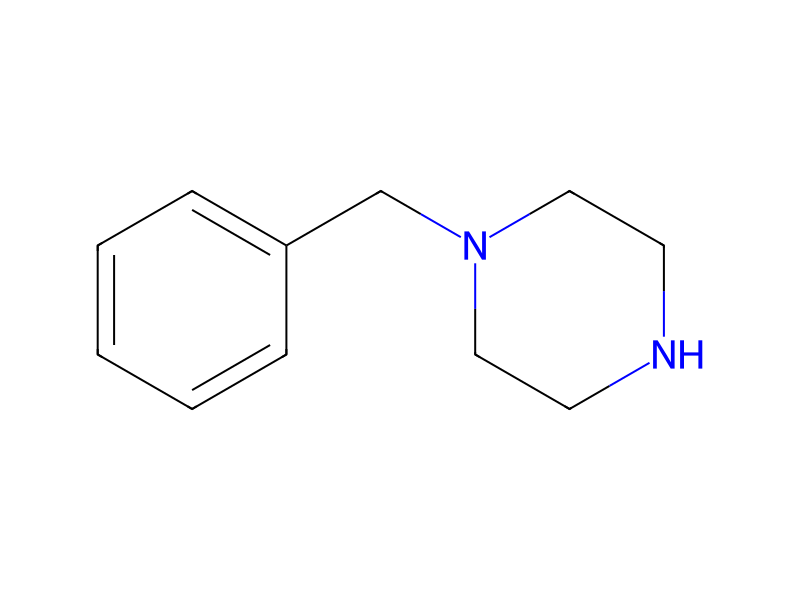
1-Benzylpiperazine → 5,6-Dihydro-2-(4-benzyl-1-piperazinyl)-4H-imidazo[4,5,1-ij]quinoline
HRID 1440706
Reaction equation

Cl[C:2]1[N:12]2[C:13]3[C:8]([CH2:9][CH2:10][CH2:11]2)=[CH:7][CH:6]=[CH:5][C:4]=3[N:3]=1.[CH2:14]([N:21]1[CH2:26][CH2:25][NH:24][CH2:23][CH2:22]1)[C:15]1[CH:20]=[CH:19][CH:18]=[CH:17][CH:16]=1>>[CH2:14]([N:21]1[CH2:26][CH2:25][N:24]([C:2]2[N:12]3[C:13]4[C:8]([CH2:9][CH2:10][CH2:11]3)=[CH:7][CH:6]=[CH:5][C:4]=4[N:3]=2)[CH2:23][CH2:22]1)[C:15]1[CH:16]=[CH:17][CH:18]=[CH:19][CH:20]=1Participants
3


Procedure
A solution of 2-chloro-5,6-dihydro-4H-imidazo[4,5,1-ij]quinoline (3.00 g) in 1-benzylpiperazine (10 ml) was stirred at 100° C., under nitrogen, for four hrs. The reaction mixture was quenched with dilute sodium bicarbonate solution (300 ml) and extracted with dichloromethane. The combined organic extracts were dried over anhydrous magnesium sulfate, filtered, and the filtrate was concentrated. The residue was purified by high performance liquid chromatography (silica gel; 25:1 dichloromethane-methanol). The appropriate fractions were collected and evaporated. The residue was recrystallized from ethyl acetate to give 3.6 g (70%) of product, mp 157°-158° C.