Reaction equation

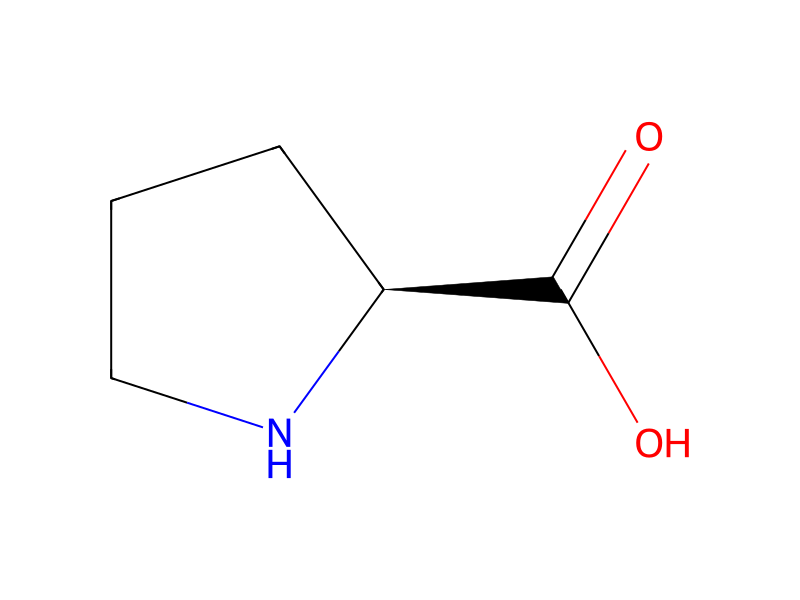
[C:1]([S:4][CH2:5][CH:6]([CH2:10][CH2:11][CH2:12][NH2:13])[C:7]([OH:9])=O)(=[O:3])[CH3:2].C1C([N+]([O-])=O)=CC=C(O[C:24]([C:26]([F:29])([F:28])[F:27])=[O:25])C=1.[NH:30]1[CH2:37][CH2:36][CH2:35][C@H:31]1[C:32]([OH:34])=[O:33].[OH-].[Na+]>N1C=CC=CC=1.O>[C:1]([S:4][CH2:5][CH:6]([CH2:10][CH2:11][CH2:12][NH:13][C:24](=[O:25])[C:26]([F:27])([F:28])[F:29])[C:7]([N:30]1[CH2:37][CH2:36][CH2:35][C@H:31]1[C:32]([OH:34])=[O:33])=[O:9])(=[O:3])[CH3:2]Participants
7
Reactant 4



Product 1

Reagents, catalysts & solvents 2


Procedure
A mixture of 2-acetylthiomethyl-5-aminopentanoic acid (2.05 g.) and p-nitrophenyltrifluoroacetate (5.6 g.) in pyridine (10 ml.) is stirred at room temperature for four hours, and then added dropwise to a vigorously stirred solution of L-proline (1.55 g.) in water (10 ml.) while keeping the pH at 9 with careful addition of 2 N sodium hydroxide. When the consumption of sodium hydroxide stops, the reaction mixture is acidified with hydrochloric acid and extracted with ethyl acetate. The solvent is removed in vacuo and the residue is chromatographed on a silica gel column to yield 1-[2-acetylthiomethyl-5-(trifluoroacetylamino)pentanoyl]-L-proline.
Workup
- customWhen the consumption of sodium hydroxide
- extractionextracted with ethyl acetate
- customThe solvent is removed in vacuo
- customthe residue is chromatographed on a silica gel column
Sources & evidence
- ORD record
- ord-093901b511b341b28b69358266cc88b4
- Source dataset
- uspto-grants-1979_12
- Patent number
- US04177277
Linked notes
Loading…