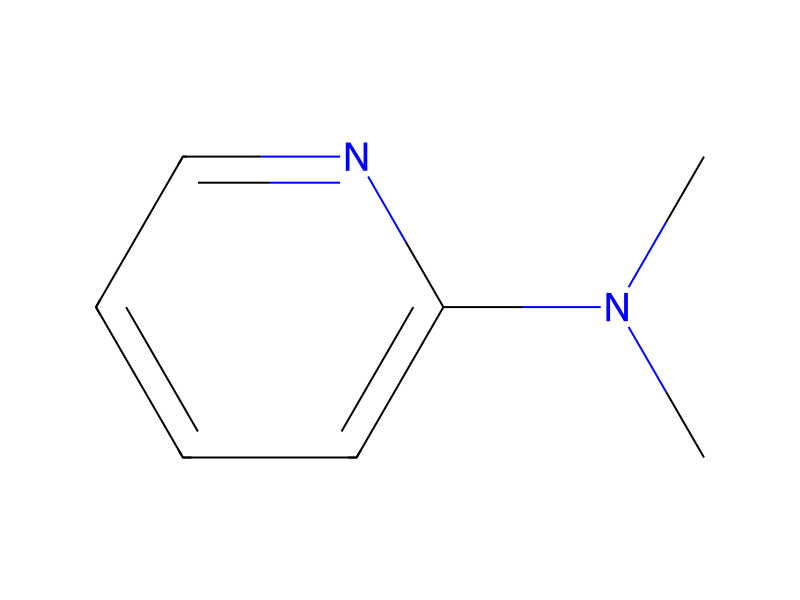
[Br:1][C:2]1[CH:3]=[C:4]([CH:12]2[C:21]3[C:16](=[CH:17][C:18]([N:22]([CH3:24])[CH3:23])=[CH:19][CH:20]=3)[O:15][CH:14]([OH:25])[CH2:13]2)[CH:5]=[C:6]([O:10][CH3:11])[C:7]=1[O:8][CH3:9].CN(C1C=CC=CN=1)C.N1C=CC=CC=1.[C:41](OC(=O)C)(=[O:43])[CH3:42]>ClCCl>[C:41]([O:25][CH:14]1[CH2:13][CH:12]([C:4]2[CH:5]=[C:6]([O:10][CH3:11])[C:7]([O:8][CH3:9])=[C:2]([Br:1])[CH:3]=2)[C:21]2[C:16](=[CH:17][C:18]([N:22]([CH3:23])[CH3:24])=[CH:19][CH:20]=2)[O:15]1)(=[O:43])[CH3:42]To a mixture of 4-(3-bromo-4,5-dimethoxyphenyl)-7-dimethylamino-2-hydroxy-chroman (9 mg, 0.022 mmol), dimethylamino-pyridine (catalytic) and pyridine (0.1 ml) in dichloromethane at 0° C. was added acetic anhydride (0.05 ml). The mixture was stirred overnight at room temperature. To the mixture was added ice and the mixture was extracted with dichloromethane. The extract was washed with 1N HCl, saturated NaHCO3 and saturated sodium chloride solution, dried and the solvent was evaporated. The title compound was obtained upon chromatography of the crude material over a bond-elute (hexane:ethyl acetate=9:1 and 4:1 as eluent) (6.0 mg; 61%). 1H NMR (CD3OD): 6.99 (d, J=1.9 Hz), 6.86 (broad signal) and 6.85 (d, J=1.8 Hz) (2H), 6.72 (d, J=8.8 Hz) and 6.54 (d, J=8.5 Hz) (1H), 6.47 (t, J=2.3 Hz) and 6.42 (dd, J=2.2, 9.2 Hz) (1H), 6.35 (overlapping dd, J=2.5, 8.7 Hz) (1H), 6.26 (d, J=2.3 Hz) and 6.22 (d, J=2.5 Hz) (1H), 4.14 (overlapping dd, J=6.0, 11.9 Hz; 1H), 3.76-3.80 (s, 6H), 2.87 and 2.91 (s each, 6H), 2.40-2.45 and 2.11-2.32 (m each; 2H), 2.08 and 1.79 (s each, 3H).