Reaction equation
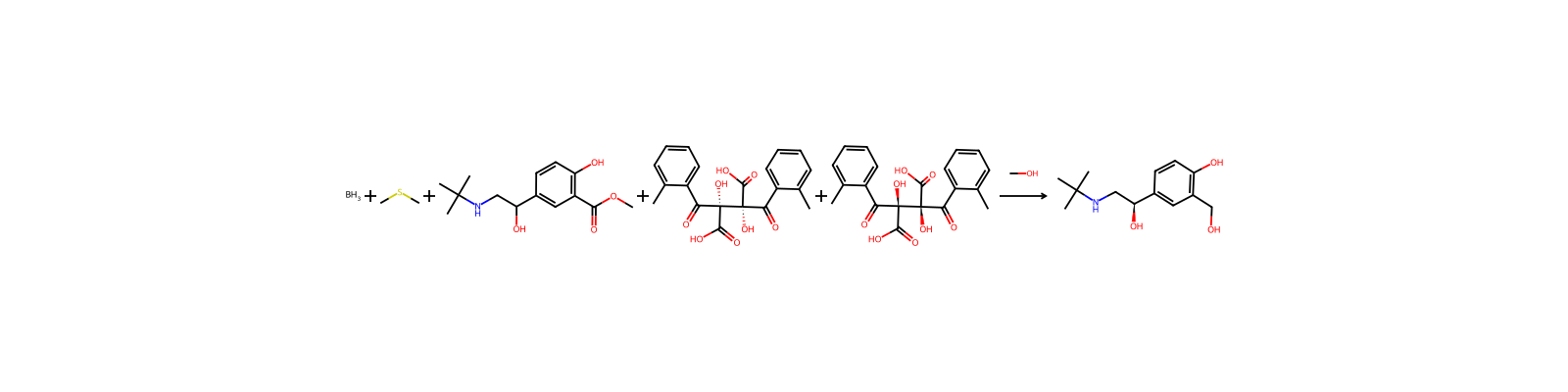
B.CSC.[CH3:5][C:6]([NH:9][CH2:10][CH:11]([C:13]1[CH:14]=[CH:15][C:16]([OH:23])=[C:17]([CH:22]=1)[C:18](OC)=[O:19])[OH:12])([CH3:8])[CH3:7].C1(C)C(C([C@@](C(O)=O)(O)[C@@](C(C2C(C)=CC=CC=2)=O)(O)C(O)=O)=O)=CC=CC=1.C1(C)C(C([C@](C(O)=O)(O)[C@](C(C2C(C)=CC=CC=2)=O)(O)C(O)=O)=O)=CC=CC=1>CO>[CH3:8][C:6]([NH:9][CH2:10][C@H:11]([OH:12])[C:13]1[CH:14]=[CH:15][C:16]([OH:23])=[C:17]([CH2:18][OH:19])[CH:22]=1)([CH3:5])[CH3:7]Participants
Reactant 4


Product 1

Reagents, catalysts & solvents 1

Procedure
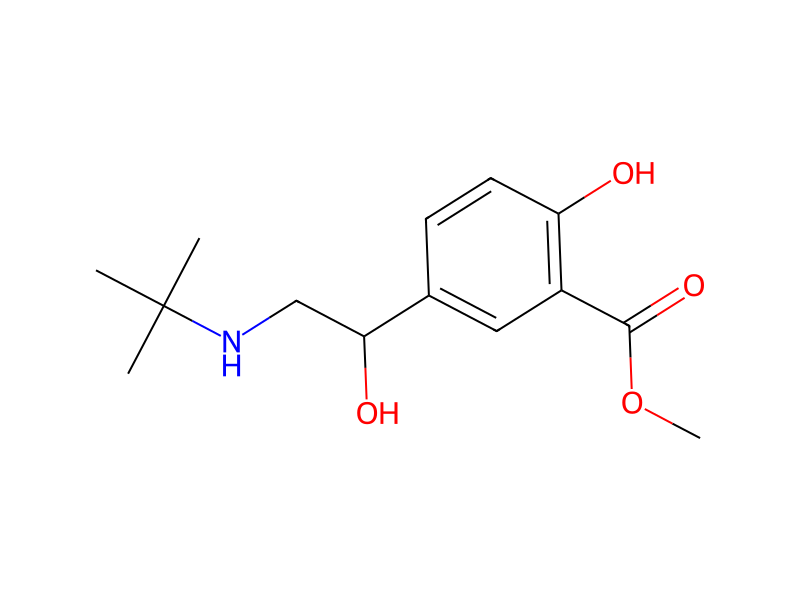
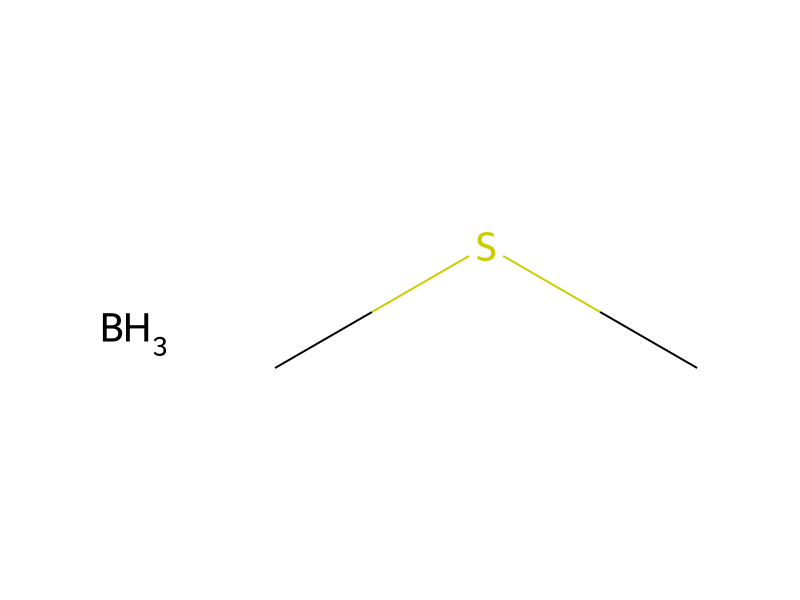
Several patents report synthetic routes using enantiomeric separation, however, the synthetic routes result in low yields of the enantiomerically pure product. Optically pure levalbuterol was synthesized by the borane-methylsulfide reduction of the enantiomerically pure precursor (Formula 2) as described in U.S. Pat. No. 5,399,765. The reaction dissolved a mixture of enantiomers of methyl 5-[2-[(1,1-dimethylethyl)amino]-1-hydroxyethyl]-2-hydroxybenzoate and a chiral acid selected from (−)-di-toluoyl-L-tartaric acid and (+)-di-toluoyl-D-tartaric acid in methanol, upon cooling one stereoisomer crystallized, which was separated, and recrystallized as a diastereomer from methanol, the diastereomer was separated, treated with base, and upon reduction formed optically active levalbuterol.
Workup
- customseparation
- customhowever, the synthetic routes result
- customin low yields of the enantiomerically pure product
- dissolutionThe reaction dissolved
- temperatureupon cooling one stereoisomer crystallized, which
- customwas separated
- customrecrystallized as a diastereomer from methanol
- customthe diastereomer was separated
- additiontreated with base
Sources & evidence
- ORD record
- ord-c07eb2839d6b4c14a590a0ea09564163
- Source dataset
- uspto-grants-2009_01
- Patent number
- US07482489B2
Linked notes
Loading…