Formaldehyde → 3,5-Dichlorosalicyl alcohol
Reaction equation

[Cl:1][C:2]1[CH:7]=[C:6]([Cl:8])[CH:5]=[CH:4][C:3]=1[OH:9].[OH-:10].[Na+].[CH2:12]=O>S(=O)(=O)(O)O>[Cl:1][C:2]1[C:3]([OH:9])=[C:4]([CH:5]=[C:6]([Cl:8])[CH:7]=1)[CH2:12][OH:10]Participants
5
Reactant 3

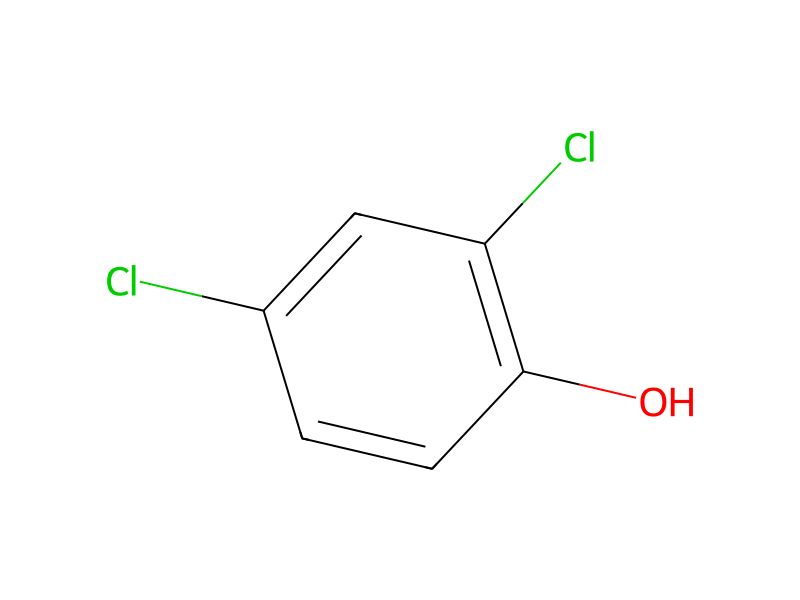

Product 1

Reagents, catalysts & solvents 1

Procedure
A mixture of 2,4-dichlorophenol (15.3 g), 10% sodium hydroxide solution (100 ml) and 40% aqueous formaldehyde solution (37.5 ml) was heated at 95°-100° C. for 4 hr, then cooled and acidified by addition of 2-normal sulphuric acid (70 ml). The precipitated oil was extracted into toluene, and the extract washed with sodium bicarbonate solution, dried and evaporated. The residue was recrystallised from boiling water to yield 3,5-dichloro-2-hydroxybenzyl alcohol (4.0 g), m.p. 81°-82° C. on drying at 56° C./20 mm. Hg=2660 Pa.
Workup
- temperaturewas heated at 95°-100° C. for 4 hr
- temperaturecooled
- extractionThe precipitated oil was extracted into toluene
- washthe extract washed with sodium bicarbonate solution
- customdried
- customevaporated
- customThe residue was recrystallised
Sources & evidence
- ORD record
- ord-3ada45b6e1414c3daf08adc4c2c5dc3f
- Source dataset
- uspto-grants-1984_07
- Patent number
- US04461907
Reaction notes
Loading…