Reaction equation

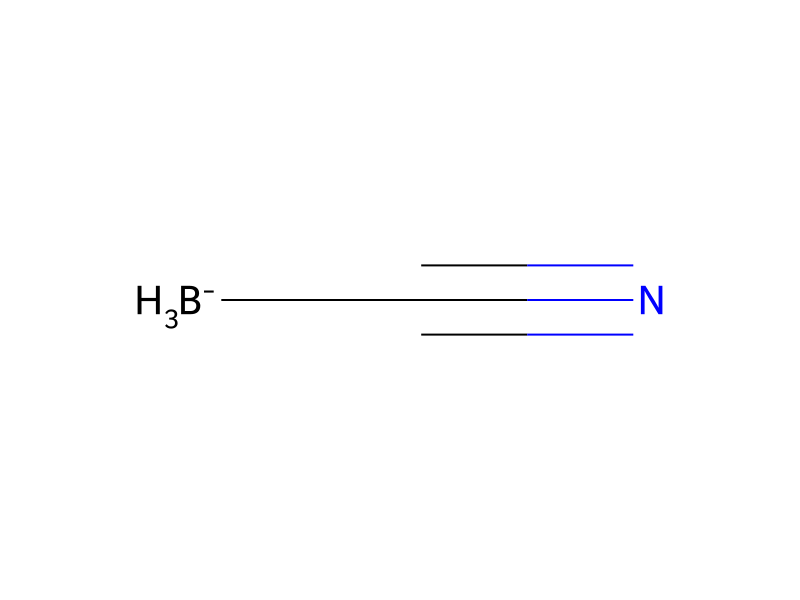
[Br:1][C:2]1[CH:9]=[CH:8][CH:7]=[C:4]([CH:5]=O)[C:3]=1[OH:10].[Cl-].C([NH2+]CCCC)CCC.[N+:21]([CH2:24][CH2:25]O)([O-:23])=[O:22].C([BH3-])#N>C(OC(=O)C)CC(C)C.CO.O>[Br:1][C:2]1[CH:9]=[CH:8][CH:7]=[C:4]2[C:3]=1[O:10][CH2:25][CH:24]([N+:21]([O-:23])=[O:22])[CH2:5]2Participants
8
Reactant 4



Product 1

Reagents, catalysts & solvents 3



Procedure
Commercially available 3-bromosalicylaldehyde (0.5 g; 2.5 mmol), di-n-butylammonium chloride (0.2 g; 1.2 mmol) and 2-nitroethanol (0.36 g; 4.0 mmol) were refluxed for 8 hours in i-pentylacetate with a Dean-Stark apparatus under nitrogen atmosphere. The solvent was evaporated and the product was dissolved in dichloromethane (15 ml) and cyanoborohydride (0.5 g; 8.1 mmol) in methanol (15 ml) was added. The mixture was stirred for 30 minutes at room temperature. Water was added and the mixture extracted with dichloromethane. The phase were separated and the organic layer was dried (MgSO4). The solvent was evaporated yielding 400 mg (63%) of 8-bromo-3-nitrochroman as an oil.
Workup
- customThe solvent was evaporated
- dissolutionthe product was dissolved in dichloromethane (15 ml)
- extractionthe mixture extracted with dichloromethane
- customThe phase were separated
- dry with materialthe organic layer was dried (MgSO4)
- customThe solvent was evaporated
Sources & evidence
- ORD record
- ord-9b0f3df3890e45cca073dab5c798eac6
- Source dataset
- uspto-grants-1994_04
- Patent number
- US05306830
Linked notes
Loading…