HomeMCPWorkbenchSkills
HomeWorkbenchNotificationsMe
llms.txt · MCP GuidePrivacy Policy · Terms of Service · Supportv1.8.3
  1. Home
  2. /Reaction

Potassium Phosphate, Tribasic → HCID 59242652, compound

HRID 1485860
Print

Reaction equation

HRID 1485860 reaction equation
[C:1]([O:5][C:6]([N:8]1[CH2:13][CH2:12][N:11]([C:14]2[N:15]=[N:16][C:17]([C:27]([F:30])([F:29])[F:28])=[C:18]([C:20]3[CH:25]=[CH:24][C:23](Br)=[CH:22][CH:21]=3)[CH:19]=2)[CH2:10][CH2:9]1)=[O:7])([CH3:4])([CH3:3])[CH3:2].C(OC(N1CCN(C2N=NC(C(F)(F)F)=C([C:50]3[CH:55]=[CH:54][C:53]([F:56])=[CH:52][CH:51]=3)C=2)CC1)=O)(C)(C)C.FC1C=CC(B(O)O)=CC=1.P([O-])([O-])([O-])=O.[K+].[K+].[K+]>O1CCOCC1.ClCCl>[C:1]([O:5][C:6]([N:8]1[CH2:13][CH2:12][N:11]([C:14]2[N:15]=[N:16][C:17]([C:27]([F:30])([F:29])[F:28])=[C:18]([C:20]3[CH:25]=[CH:24][C:23]([C:50]4[CH:55]=[CH:54][C:53]([F:56])=[CH:52][CH:51]=4)=[CH:22][CH:21]=3)[CH:19]=2)[CH2:10][CH2:9]1)=[O:7])([CH3:4])([CH3:3])[CH3:2]
ParticipantsProcedureWorkupSources & evidenceReaction notes

Participants

7

Reactant 4

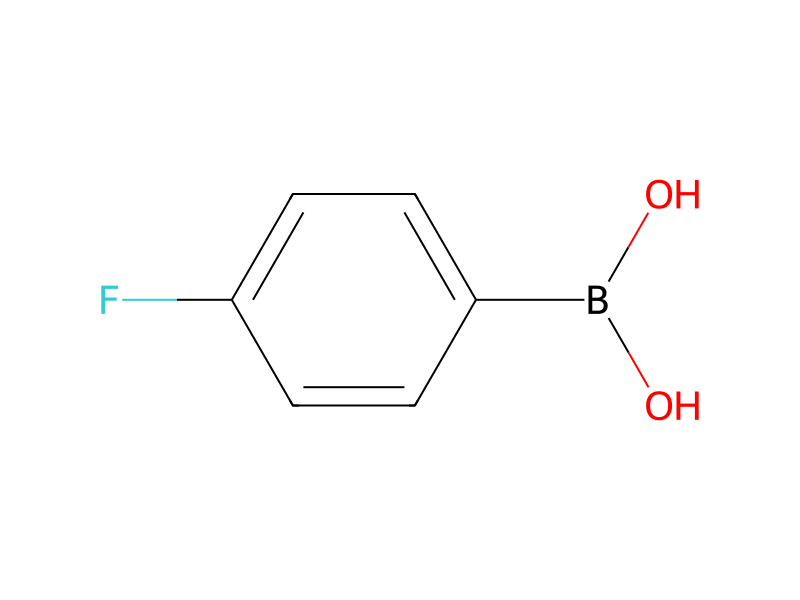
HCID 62657Potassium Phosphate, TribasicHCID 2856454-Fluorophenylboronic acidHCID 592426654-[5-(4-Fluorophenyl)-6-trifluoromethyl-pyridazin-3-yl]-piperazine-1-carboxylic acid tert-butyl esterHCID 68460084HCID 68460084, compound

Product 1

HCID 59242652HCID 59242652, compoundYield 56%

Reagents, catalysts & solvents 2

HCID 6344DichloromethaneSolventHCID 312751,4-DioxaneSolvent

Procedure

A mixture of 4-[5-(4-bromophenyl)-6-trifluoromethyl-pyridazin-3-yl]-piperazine-1-carboxylic acid tert-butyl ester (0.2 g, 0.41 mmol) (prepared by procedures similar to those described for D8), 4-fluorobenzeneboronic acid (0.069 g, 0.49 mmol), trans-Pd(OAc)2(Cy2NH)2 (0.015 g, 0.026 mmol), prepared by following the procedure described in Tao, B.; Boykin, D. W. Tetrahedron Lett. 2003, 44, 7993-7996, and potassium phosphate (0.261 g, 1.23 mmol) in dioxane (3 ml) was stirred at 80° C. overnight. The reaction mixture was then diluted with dichloromethane and extracted with a saturated solution of sodium carbonate. The organic layers were separated, dried (Na2SO4), filtered and the solvent evaporated in vacuo. The residue was then purified by column chromatography (silica gel; dichloromethane/heptane 3:7 to 10:0). The desired fractions were collected and evaporated in vacuo to yield D12 (0.115 g, 56%). C26H26F4N4O2 requires 502; Found 503 (MH+).

Workup

  1. customprepared by procedures similar to
  2. customprepared
  3. extractionextracted with a saturated solution of sodium carbonate
  4. customThe organic layers were separated
  5. dry with materialdried (Na2SO4)
  6. filtrationfiltered
  7. customthe solvent evaporated in vacuo
  8. customThe residue was then purified by column chromatography (silica gel; dichloromethane/heptane 3:7 to 10:0)
  9. customThe desired fractions were collected
  10. customevaporated in vacuo

Sources & evidence

ORD record
ord-a0ace0047fc543489d101f6612cd863f
Source dataset
uspto-grants-2016_08
DOI
10.6084/m9.figshare.5104873.v1
Patent number
US09422296B2

Reaction notes

On this pageParticipantsProcedureWorkupSources & evidenceReaction notes