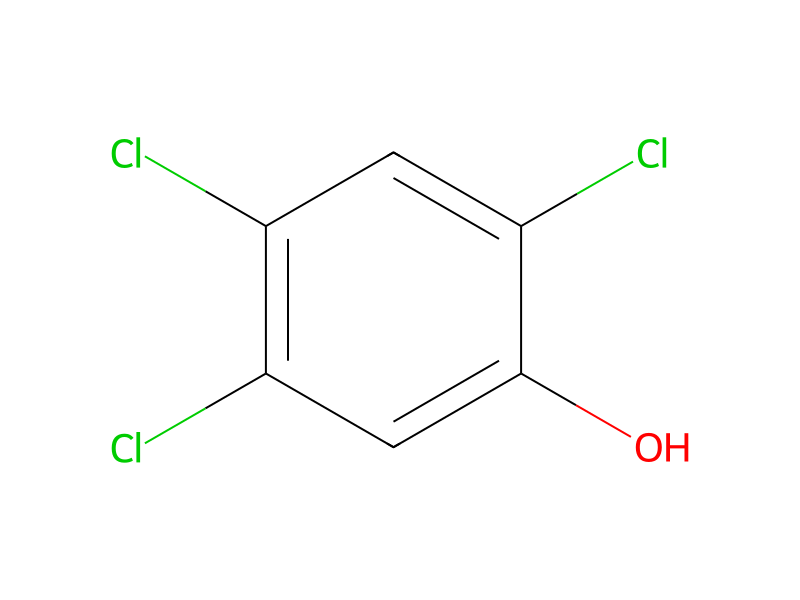
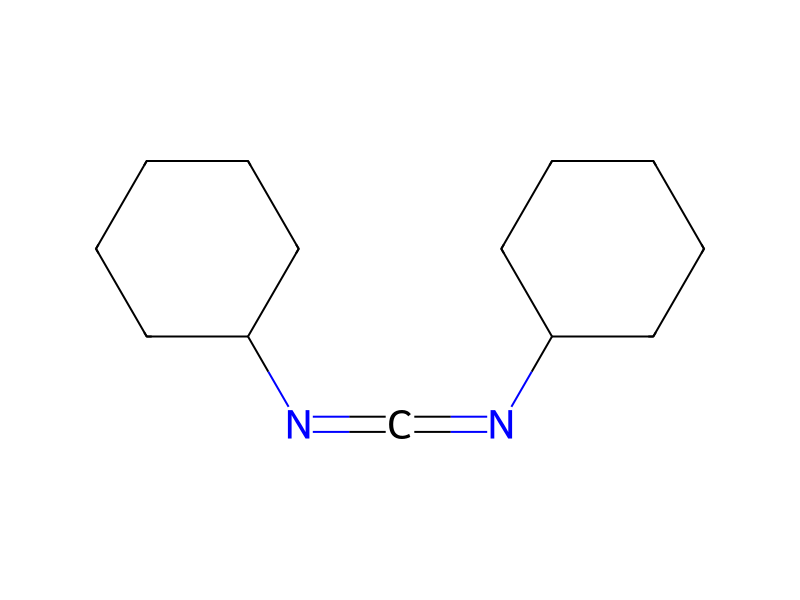
[CH2:1]([O:9][C:10]1[CH:18]=[CH:17][C:13]([C:14]([OH:16])=[O:15])=[CH:12][CH:11]=1)[CH2:2][CH2:3][CH2:4][CH2:5][CH2:6][CH2:7][CH3:8].[Cl:19][C:20]1[CH:25]=[C:24]([Cl:26])[C:23]([Cl:27])=[CH:22][C:21]=1O.C1(N=C=NC2CCCCC2)CCCCC1>C(OCC)C>[CH2:1]([O:9][C:10]1[CH:11]=[CH:12][C:13]([C:14]([O:16][C:21]2[CH:22]=[C:23]([Cl:27])[C:24]([Cl:26])=[CH:25][C:20]=2[Cl:19])=[O:15])=[CH:17][CH:18]=1)[CH2:2][CH2:3][CH2:4][CH2:5][CH2:6][CH2:7][CH3:8]To a solution of 4-octyloxybenzoic acid (13.8 g) in diethyl ether (552 ml) were added 2,4,5-trichlorophenol (10.87 g) and N,N'-dicyclohexylcarbodiimide (11.37 g). The solution was stirred under a nitrogen atmosphere for 18 hours at room temperature. The precipitate was removed by filtration and the filtrate was concentrated in vacuo. The residue was dissolved in petroleum ether and was allowed to stand on ice-water. The resulting crystals (15.2 g) were filtered and dissolved in warm n-hexane (150 ml). After standing overnight at room temperature, the resulting crystal was removed by filtration. The filtrate was concentrated to an oil which was purified by a column chromatography over silica gel using a mixture of ethyl acetate and n-hexane to give 2,4,5-trichlorophenyl 4-octyloxybenzoate (7.58 g) (MP 53° C., Anal Calcd. for C21H23O3Cl3 : Cl 24.75, Found: Cl 24.05).