Reaction equation

[P:1]([F:5])([F:4])(=[O:3])[OH:2].F[P-](F)(F)(F)(F)F.[Li+:13].[Cl-].[Mg+2:15].[Cl-].C(=O)(OC)OC>>[P:1]([F:5])([F:4])([O-:3])=[O:2].[Mg+2:15].[P:1]([F:5])([F:4])([O-:3])=[O:2].[P:1]([F:5])([F:4])([O-:3])=[O:2].[Li+:13]Participants
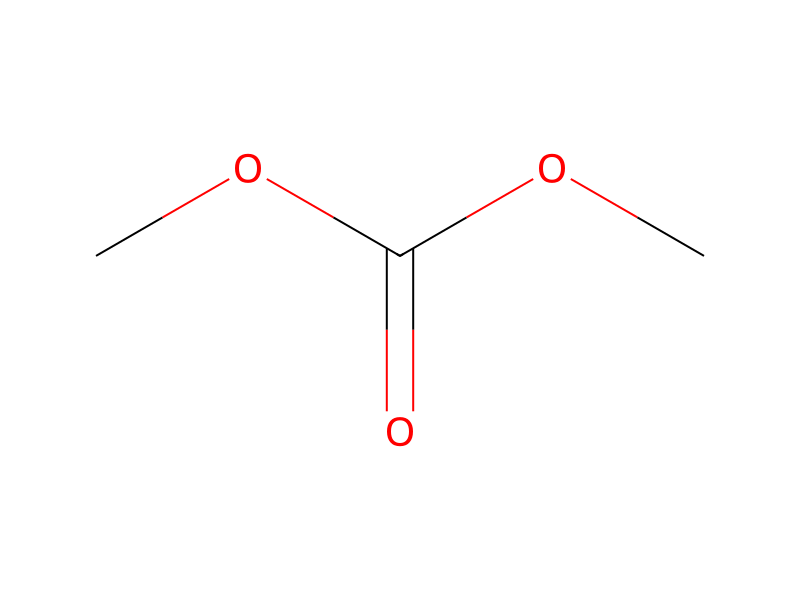


Conditions
- Temperature
- 130 °C
Procedure
Difluorophosphoric acid (reagent, produced by Fluorochem Ltd.) (15.4 g) was weighed into a 250 ml-volume PFA vessel, and 3.4 g of lithium hexafluorophosphate (reagent, produced by Stella Chemifa Corporation) was added. Furthermore, 7.1 g of magnesium chloride (reagent, produced by Wako Pure Chemical Industries, Ltd.) and 15.0 g of dimethyl carbonate (reagent, produced by Kishida Chemical Co., Ltd.) were added, and the mixture was stirred for 1 hour under nitrogen flow and after heating at 130° C. for 17 hours, cooled to room temperature to obtain a mixed crystal of magnesium difluorophosphate and lithium difluorophosphate. Anion analysis was performed in the same manner as in Example 2-6, as a result, the obtained difluorophosphate ion was 91% in terms of the relative area.
Workup
- additionwas added
- temperaturecooled to room temperature
Sources & evidence
- ORD record
- ord-2d1c14e66aef4fe58ba858170288f5c2
- Source dataset
- uspto-grants-2015_12
- Patent number
- US09203106B2
Linked notes
Loading…