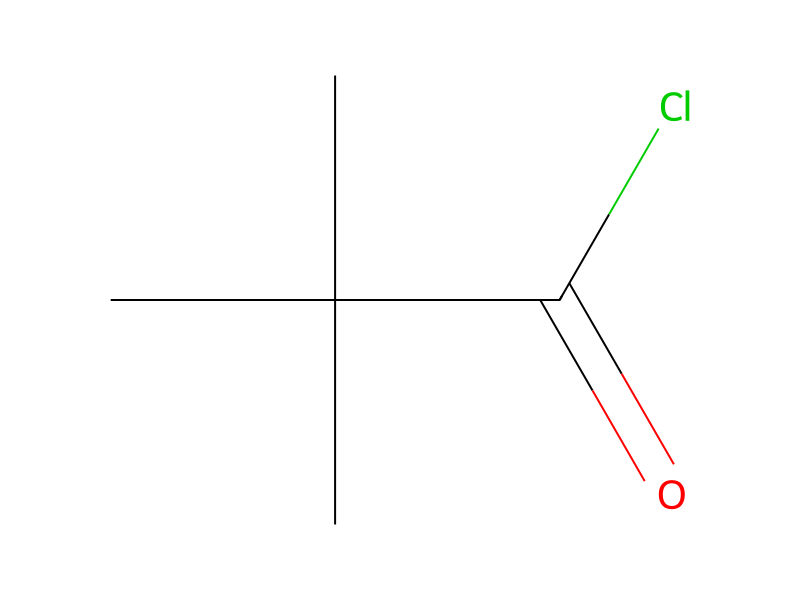
Pivaloyl chloride → HCID 178447243, compound
HRID 1510920
Reaction equation

[NH2:1][C:2]1[NH:7][C:6]2=[N:8][CH:9]=[CH:10][C:5]2=[C:4]([Cl:11])[N:3]=1.[C:12](Cl)(=[O:17])[C:13]([CH3:16])([CH3:15])[CH3:14]>N1C=CC=CC=1>[Cl:11][C:4]1[N:3]=[C:2]([NH:1][C:12](=[O:17])[C:13]([CH3:16])([CH3:15])[CH3:14])[NH:7][C:6]2=[N:8][CH:9]=[CH:10][C:5]=12Participants
4
Reactant 2

Product 1

Reagents, catalysts & solvents 1

Procedure
To a stirring solution of 2-amino-4-chloro-pyrrolo[2,3-d]pyrimidine (7.3 g, 43.61 mmol) in anhydrous pyridine (120 mL) was added pivaloyl chloride (18.7 mL, 152.63 mmol). The reaction was stirred at RT under nitrogen for 16 h and quenched with MeOH (50 mL). The solvents were then removed in vacuo, and the residue was co-evaporated with toluene (100 mL). The resulting residue was dissolved in EtOAc (150 mL) and washed with 0.1 M HCl (3×75 mL). The organic layer was dried (MgSO4) and evaporated. The crude material was resolved by silica chromatography (30% EtOAc/hexane) to yield 9a (12.2 g) as a white crystalline solid.