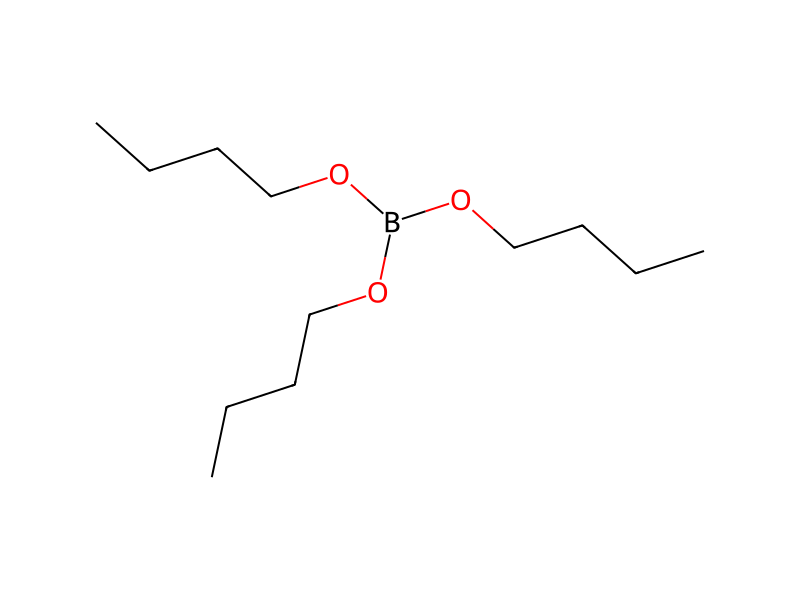
First, 11.2 g (107 mmol) of 2-chloro-2-butenal and 8.35 g (50.0 mmol) of benzenesulfonyl cyanide were introduced to the same reaction vessel as in Example 1. Toluene (15 ml) as the solvent and butanol (1.5 ml) were added, and 1.30 g (5.65 mmol) of tributyl borate was added. Then the mixture was heated under reflux for 7 hours while agitating at an internal temperature of 121° C. in a nitrogen atmosphere, separating and removing water that was produced. After this solution was cooled to room temperature, the low-boiling components, such as solvent, etc., were removed under reduced pressure and the resulting concentrate was cooled in an ice bath to precipitate crystals. The crystals were filtered with a glass filter and washed with 10 ml toluene that had been cooled to 5° C. or lower. Then the crystals were dried for 2 hours in vacuo to give 8.87 g of 2-benzenesulfonyl-5-chloropyridine with the following properties as colorless crystals (purity of 98%, yield of 69% based on benzenesulfonyl cyanide).