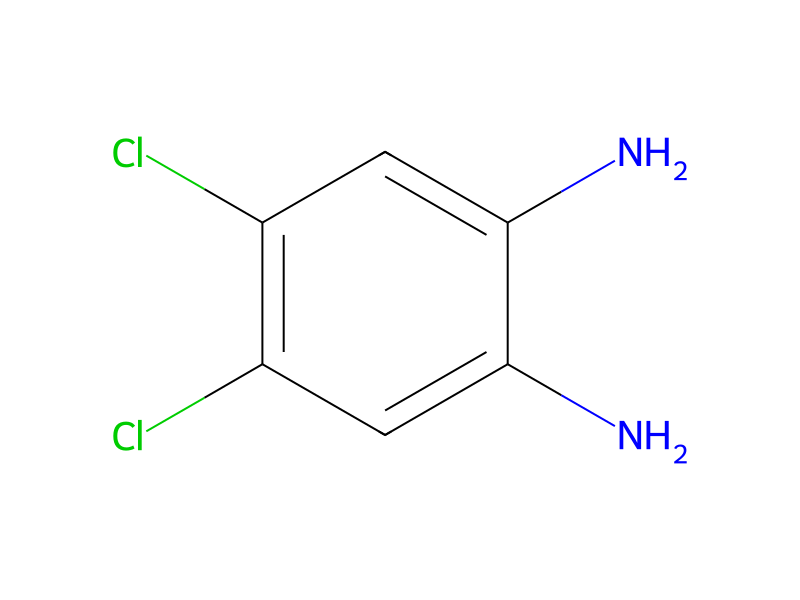
1,3-Diethyl 2-oxopropanedioate → Ethyl 6,7-dichloro-3-hydroxyquinoxaline-2-carboxylate
HRID 1577806
Reaction equation

[Cl:1][C:2]1[C:7]([Cl:8])=[CH:6][C:5]([NH2:9])=[C:4]([NH2:10])[CH:3]=1.O=[C:12]([C:18](OCC)=[O:19])[C:13]([O:15][CH2:16][CH3:17])=[O:14]>C(O)C>[Cl:1][C:2]1[CH:3]=[C:4]2[C:5](=[CH:6][C:7]=1[Cl:8])[N:9]=[C:12]([C:13]([O:15][CH2:16][CH3:17])=[O:14])[C:18](=[O:19])[NH:10]2Participants
4
Reactant 2

Product 1

Reagents, catalysts & solvents 1

Procedure
A solution of 17.7 g. of 4,5-dichloro-o-phenylenediamine in 200 ml. of anhydrous ethanol was prepared. A 17.4 g. batch of diethyl 2-ketomalonate were added to this solution and the mixture was heated to refluxing temperature for about 17 hours. The volatile constituents were removed by evaporation in vacuo. Recrystallization of the residue from ethanol yielded 20 g. of ethyl 6,7-dichloro-3,4-dihydro-3-oxo-2-quinoxaline carboxylate formed in the above reaction, melting in the range 226°-227° C.