Reaction equation

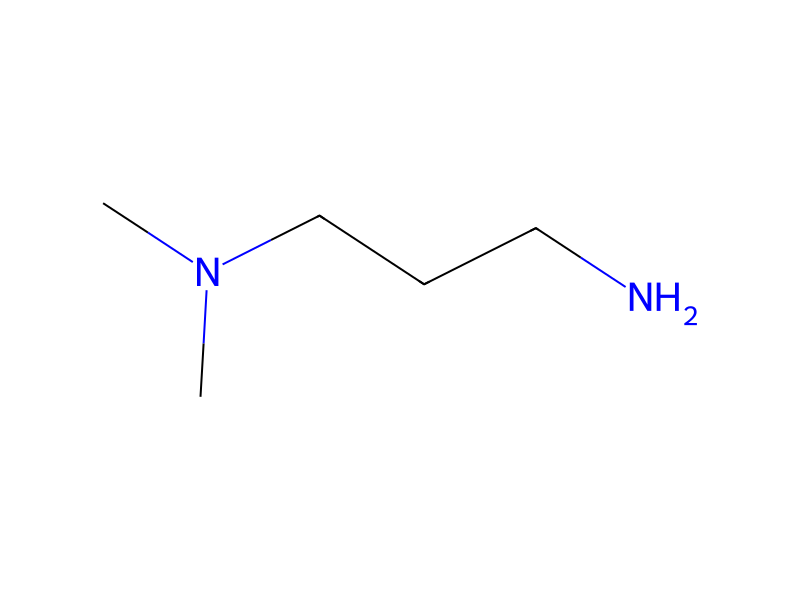
[Cl:1][C:2]1[CH:15]=[C:14]2[C:5]([N:6]([OH:28])[C:7]3[CH2:8][CH:9]([C:18]4[CH:23]=[CH:22][C:21]([C:24]([F:27])([F:26])[F:25])=[CH:20][CH:19]=4)[CH2:10][C:11](=O)[C:12]=3[C:13]2=[O:16])=[CH:4][CH:3]=1.[CH3:29][N:30]([CH3:35])[CH2:31][CH2:32][CH2:33][NH2:34]>C(O)C>[Cl:1][C:2]1[CH:15]=[C:14]2[C:5]([N:6]([OH:28])[C:7]3[CH2:8][CH:9]([C:18]4[CH:19]=[CH:20][C:21]([C:24]([F:27])([F:26])[F:25])=[CH:22][CH:23]=4)[CH2:10][C:11](=[N:34][CH2:33][CH2:32][CH2:31][N:30]([CH3:35])[CH3:29])[C:12]=3[C:13]2=[O:16])=[CH:4][CH:3]=1Participants
4



Procedure
To 2.3 g of 7-chloro-3,4-dihydro-10-hydroxy-3-[4-(trifluoromethyl)phenyl]-1,9(2H,10H)-acridinedione in 55 ml of ethanol is added 0.70 g of N,N-dimethyl-1,3-propanediamine in 5 ml of ethanol. The solution is heated to reflux and then allowed to cool to room temperature. The solvent is removed in vacuo and the residue is recrystallized from a mixture of benzene and cyclohexane to give 7-chloro-1-[[3-(dimethylamino)propyl]imino]-1,3,4,10-tetrahydro-10-hydroxy-3-[4-(trifluoromethyl)phenyl]9(2H)-acridinone; mp 130°-135° C.
Workup
- temperatureThe solution is heated
- temperatureto reflux
- customThe solvent is removed in vacuo
- customthe residue is recrystallized from a mixture of benzene and cyclohexane
Sources & evidence
- ORD record
- ord-4b33c0e283c04407b2aeba9b0ab23e87
- Source dataset
- uspto-grants-1981_09
- Patent number
- US04291034
Linked notes
Loading…