Boric Acid → Calcium;2,3-dihydroxy-3-[2-hydroxy-5-(hydroxymethyl)-1,3,2-dioxaborolan-4-yl]propanoate
Reaction equation

[O:1]=[C:2]([O-:13])[C@@H:3]([C@H:5]([C@@H:7]([C@@H:9]([CH2:11][OH:12])[OH:10])[OH:8])[OH:6])[OH:4].[Ca+2:14].[O:15]=[C:16]([O-:27])[C@@H:17]([C@H:19]([C@@H:21]([C@@H:23]([CH2:25][OH:26])[OH:24])[OH:22])[OH:20])[OH:18].[B:28](O)(O)[OH:29]>O>[B:28]1([OH:29])[O:8][CH:7]([CH:5]([OH:6])[CH:3]([OH:4])[C:2]([O-:13])=[O:1])[CH:9]([CH2:11][OH:12])[O:10]1.[B:28]1([OH:29])[O:22][CH:21]([CH:19]([OH:20])[CH:17]([OH:18])[C:16]([O-:27])=[O:15])[CH:23]([CH2:25][OH:26])[O:24]1.[Ca+2:14]Participants
4
Reactant 2
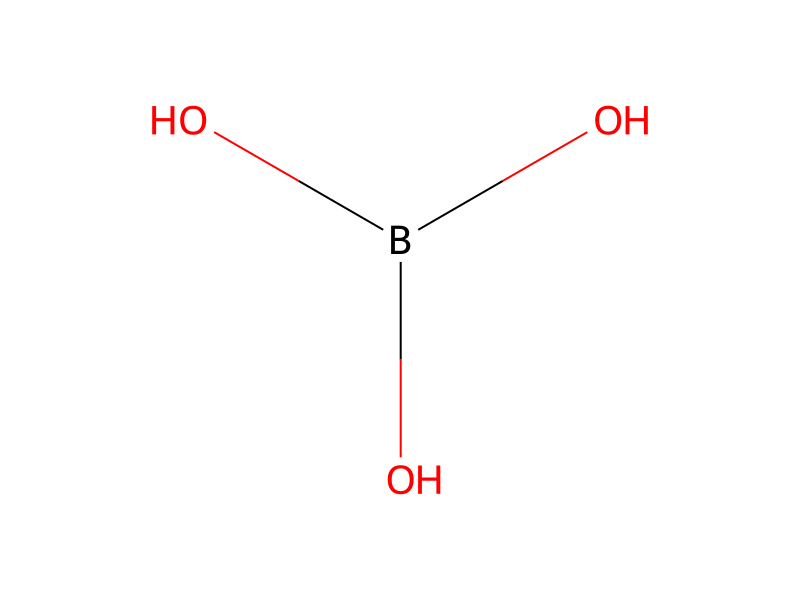

Product 1

Reagents, catalysts & solvents 1

Conditions
- Temperature
- 50 °C
Procedure
860.5 grams of calcium gluconate monohydydrate and 244 grams of technical grade boric acid were added to 1100 grams of water at room temperature. The resultant mixture was stirred and warmed to a temperature of about 50° C. until a dark brown solution was obtained. The solution was allowed to cool to room temperature. The solution can be used as is or the water can be evaporated to provide the calcium borogluconate as a brownish solid.
Workup
- customwas obtained
- temperatureto cool to room temperature
- customthe water can be evaporated
Sources & evidence
- ORD record
- ord-7829bbf061f54d449f577201ad1c7140
- Source dataset
- uspto-grants-1985_11
- Patent number
- US04554020
Reaction notes
Loading…