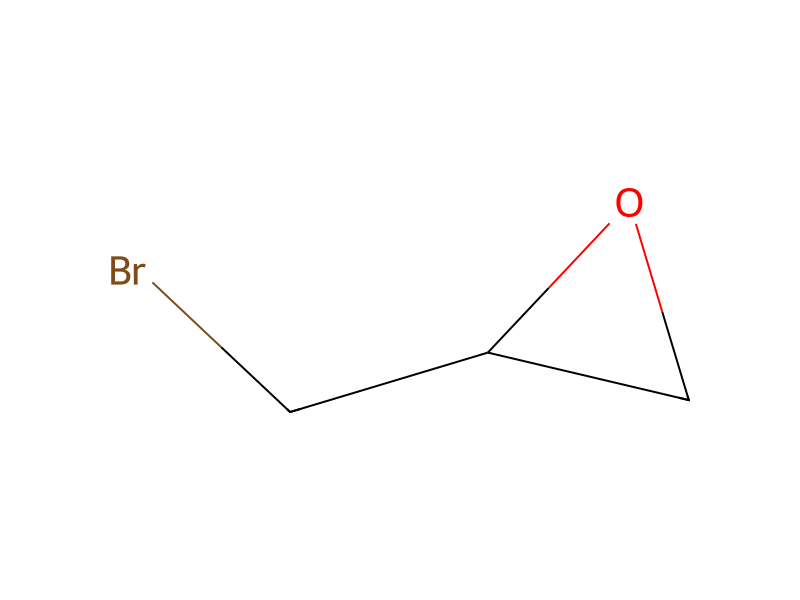
Methanol → Epibromohydrin
HRID 1589276
Reaction equation

[C:1]([O:4][CH2:5][CH:6]([Br:9])[CH2:7][Br:8])(=[O:3])[CH3:2].CO.[OH-].[Na+]>O>[C:1]([O:4][CH2:5][CH:6]([Br:9])[CH2:7][Br:8])(=[O:3])[CH3:2].[CH2:7]([CH:6]1[O:4][CH2:5]1)[Br:8]Participants
6
[C:1]([O:4][CH2:5][CH:6]([Br:9])[CH2:7][Br:8])(=[O:3])[CH3:2].CO.[OH-].[Na+]>O>[C:1]([O:4][CH2:5][CH:6]([Br:9])[CH2:7][Br:8])(=[O:3])[CH3:2].[CH2:7]([CH:6]1[O:4][CH2:5]1)[Br:8]In a 500-ml flask, 65 g of 2,3-dibromopropyl acetate (0.25 mole), 10 ml of water, 100 ml of methanol and 44 g of 50 percent sodium hydroxide (0.55 mole) are mixed giving an exothermic reaction. The mixture is then stirred at 60° C.-65° C. for 5 hours and allowed to cool. To this mixture is added 200 ml of water but no phasing occurs. The water phase is extracted twice with 150-ml portions of methylene chloride and these layers dried over sodium sulfate, filtered and distilled to give a 100 percent conversion of the 2,3-dibromopropyl acetate with a 38 percent yield of epibromohydrin.