Morpholine → N-{3-[4-(3-Methyl-4-phenoxy-phenylamino)-quinazolin-6-yl]-prop-2-ynyl}-2-morpholin-4-yl-acetamide
HRID 1594835
Reaction equation

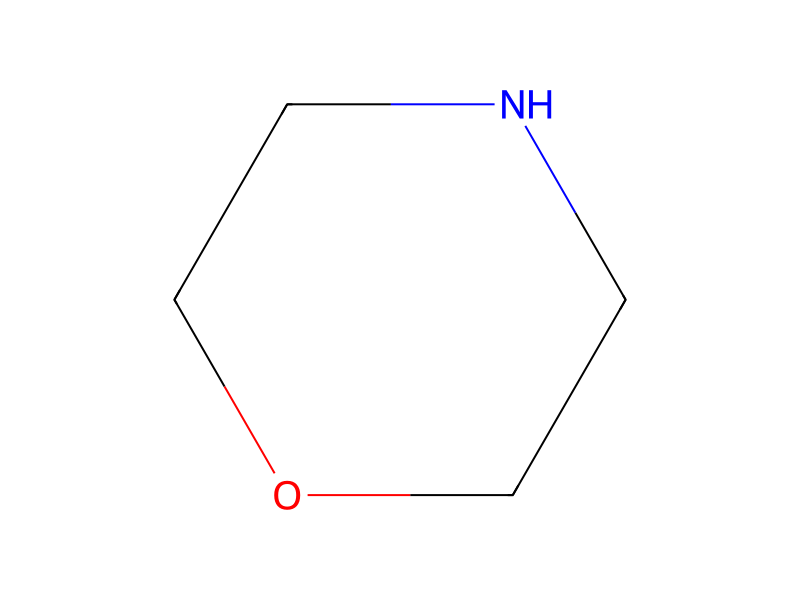
Cl[CH2:2][C:3]([NH:5][CH2:6][C:7]#[C:8][C:9]1[CH:10]=[C:11]2[C:16](=[CH:17][CH:18]=1)[N:15]=[CH:14][N:13]=[C:12]2[NH:19][C:20]1[CH:25]=[CH:24][C:23]([O:26][C:27]2[CH:32]=[CH:31][CH:30]=[CH:29][CH:28]=2)=[C:22]([CH3:33])[CH:21]=1)=[O:4].[NH:34]1[CH2:39][CH2:38][O:37][CH2:36][CH2:35]1>C1(C)C=CC=CC=1>[CH3:33][C:22]1[CH:21]=[C:20]([NH:19][C:12]2[C:11]3[C:16](=[CH:17][CH:18]=[C:9]([C:8]#[C:7][CH2:6][NH:5][C:3](=[O:4])[CH2:2][N:34]4[CH2:39][CH2:38][O:37][CH2:36][CH2:35]4)[CH:10]=3)[N:15]=[CH:14][N:13]=2)[CH:25]=[CH:24][C:23]=1[O:26][C:27]1[CH:32]=[CH:31][CH:30]=[CH:29][CH:28]=1Participants
4
Reactant 2

Product 1

Reagents, catalysts & solvents 1

Procedure
To a solution of 2-Chloro-N-{3-[4-(3-methyl-4-phenoxy-phenylamino)-quinazolin-6-yl]-prop-2-ynyl}-acetamide (63 mg; 0.12 mmol) in toluene (10 ml) was added 3 equivalents of morpholine (31 mg) and the mixture heated at reflux overnight. The reaction was cooled to room temperature and the morpholine salts were filtered out and the solvent removed from the filtrate. The residue was redissolved in CH2Cl2 with a small amount of methanol and HCl gas was bubbled through the solution for 2-3 minutes, The solution was then concentrated to 2-3 ml, diluted with ethyl acetate and filtered to obtain N-{3-[4-(3-Methyl-4-phenoxy-phenylamino)-quinazolin-6-yl]-prop-2-ynyl}-2-morpholin-4-yl-acetamide as a yellow/brown solid (65 mg; 94%). 1H NMR (400 MHz; CD3OD) δ 2.27 (3H, s), 3.21 (2H, m), 3.56 (2H, m), 3.87 (2H, m), 4.04 (2H, m), 4.09 (2H, s), 4.36 (2H, s), 6.93 (3H, d, J=8.4), 7.09 (1H, t, J=7.4 Hz), 7.34 (2H, t, J=8 Hz), 7.54 (1H, dd), 7.65 (1H, s), 7.82 (1H, d, J=8.8 Hz), 8.06 (1H, d, J=8.4 Hz), 8.76 (1H, s), 8.80 (1H, s). Irms(M+): 508.0; (M−): 506.0.