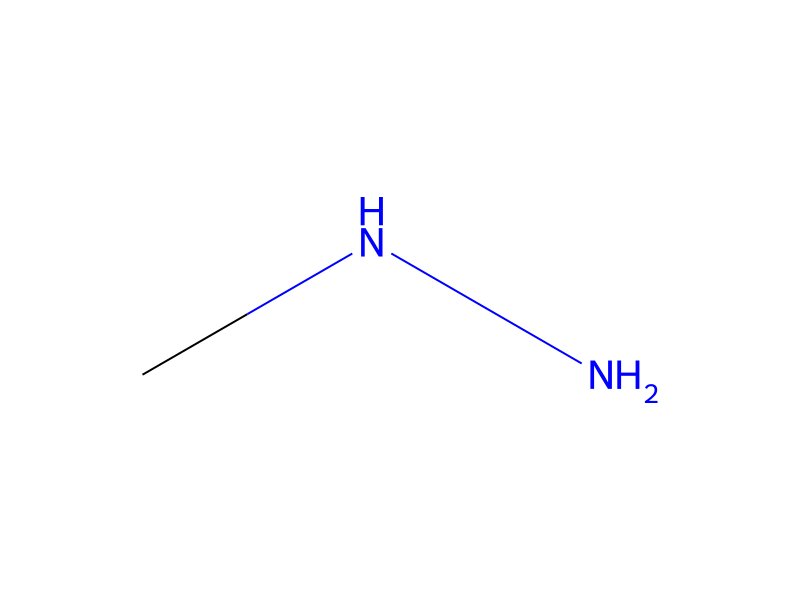
Methylhydrazine → HCID 178481741, compound
HRID 1598510
Reaction equation

[CH3:1][NH:2][NH2:3].[Cl:4][C:5]1[CH:10]=[C:9]([C:11]([F:14])([F:13])[F:12])[CH:8]=[C:7]([Cl:15])[C:6]=1[C:16](=O)[CH2:17][C:18]([O:20]CC)=O>C(O)C>[Cl:4][C:5]1[CH:10]=[C:9]([C:11]([F:14])([F:13])[F:12])[CH:8]=[C:7]([Cl:15])[C:6]=1[C:16]1[CH:17]=[C:18]([OH:20])[N:2]([CH3:1])[N:3]=1Participants
4
Reactant 2

Product 1

Reagents, catalysts & solvents 1

Procedure
A solution of 1.0 g of methylhydrazine in 15 ml of ethanol was added dropwise to 6.0 g of ethyl 3-(2,6-dichloro-4-trifluoromethylphenyl)-3-oxopropionate (5) in 50 ml of ethanol at room temperature, and the mixture was thereafter stirred at room temperature for 1 hour and further refluxed overnight. The reaction mixture was concentrated under reduced pressure to obtain a residue, which was washed with hexane to give 2.8 g of the desired compound in the form of white crystals (crude yield 50.0%).