HomeMCPWorkbenchSkills
HomeWorkbenchNotificationsMe
llms.txt · MCP GuidePrivacy Policy · Terms of Service · Supportv1.8.3
  1. Home
  2. /Reaction

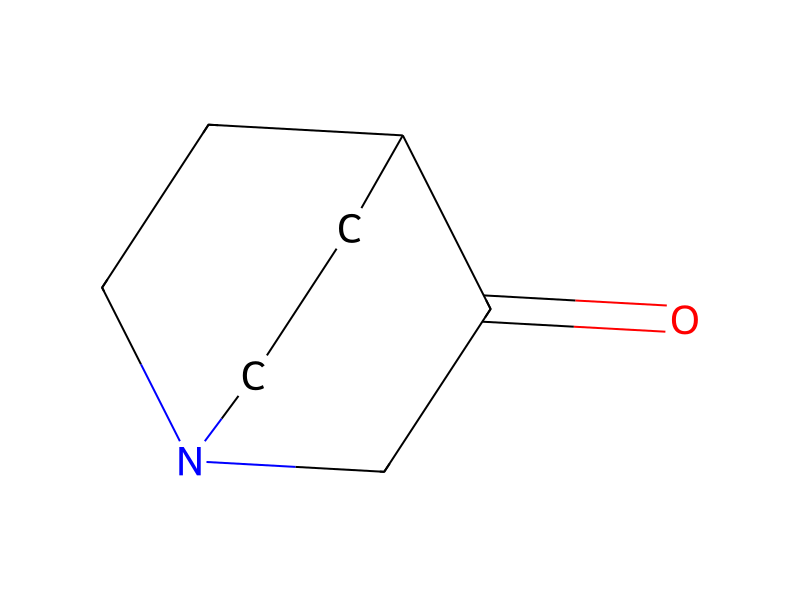
3-Quinuclidinone → 3-Quinuclidinol, (+)-

HRID 1600339
Print

Reaction equation

HRID 1600339 reaction equation
C(P(C1CCCCC1)C1CCCCC1)C.[N:16]12[CH2:23][CH2:22][CH:19]([CH2:20][CH2:21]1)[C:18](=[O:24])[CH2:17]2>CO.C1CC=CCCC=C1.C1CC=CCCC=C1.[Cl-].[Cl-].[Rh].[Rh]>[N:16]12[CH2:23][CH2:22][CH:19]([CH2:20][CH2:21]1)[C@H:18]([OH:24])[CH2:17]2
ParticipantsProcedureWorkupSources & evidenceReaction notes

Participants

5

Reactant 2

HCID 195073-QuinuclidinoneHCID 17909966Dicyclohexyl(ethyl)phosphine

Product 1

HCID 7364113-Quinuclidinol, (+)-Yield 67%

Reagents, catalysts & solvents 2

HCID 6436379Rhodium, di-mu-chlorobis((1,2,5,6-eta)-1,5-cyclooctadiene)di-CatalystHCID 887MethanolSolvent

Procedure

In an autoclave (160 ml), a solution of 200 mg (0.41 mmol) of bis(1,5-cyclooctadiene)dirhodium(I) dichloride and 480 mg (0.81 mmol) of (R)-1-[(S)-2-diphenylphosphino)ferrocenyl]ethyl-dicyclohexylphosphine (IIIb, corresponding to an educt/catalyst molar ratio of 50) in 70 ml of degassed methanol was added to 5.00 g (40 mmol) of 3-quinuclidinone under argon. The mixture was hydrogenated for 22 hours at 75° C. and 50 bar of H2. After evaporation of the reaction solution, the pH was adjusted to 1 with 1N hydrochloric acid and the mixture was extracted three times with 50 ml of dichloromethane. The aqueous phase was adjusted to pH 14 with sodium hydroxide solution (30 percent) and evaporated to dryness. The residue was extracted four times with 100 ml of dichloromethane and the combined organic extracts were dried over MgSO4 and evaporated to give 3.40 g (67 percent) of (S)-3-quinuclidinol in the form of a white crystalline solid. Recrystallization from ethyl acetate gave 2.65 g (52 percent) of (S)-3-quinuclidinol with 7 percent ee. Other data concerning the product was: ##EQU7##

Workup

  1. customAfter evaporation of the reaction solution
  2. extractionthe mixture was extracted three times with 50 ml of dichloromethane
  3. customevaporated to dryness
  4. extractionThe residue was extracted four times with 100 ml of dichloromethane
  5. dry with materialthe combined organic extracts were dried over MgSO4
  6. customevaporated

Sources & evidence

ORD record
ord-6473dc164d8b466981d302192c72a52d
Source dataset
uspto-grants-1998_04
DOI
10.6084/m9.figshare.5104873.v1
Patent number
US05744606

Reaction notes

On this pageParticipantsProcedureWorkupSources & evidenceReaction notes
