HomeMCPWorkbenchSkills
HomeWorkbenchNotificationsMe
llms.txt · MCP GuidePrivacy Policy · Terms of Service · Supportv1.8.0
  1. Home
  2. /Reaction

Dichloromethane → 7-fluoro-6-{[6-(1H-pyrazol-4-yl)-1H-[1,2,3]triazolo[4,5-b]pyrazin-1-yl]methyl}quinoline

HRID 16016
Notes
Print preview

Reaction equation

HRID 16016 reaction equation
Br[C:2]1[N:7]=[C:6]2[N:8]([CH2:11][C:12]3[CH:13]=[C:14]4[C:19](=[CH:20][C:21]=3[F:22])[N:18]=[CH:17][CH:16]=[CH:15]4)[N:9]=[N:10][C:5]2=[N:4][CH:3]=1.C(OC([N:30]1[CH:34]=[C:33](B2OC(C)(C)C(C)(C)O2)[CH:32]=[N:31]1)=O)(C)(C)C.[F-].[Cs+].C(Cl)Cl>C(COC)OC.C1C=CC(P(C2C=CC=CC=2)[C-]2C=CC=C2)=CC=1.C1C=CC(P(C2C=CC=CC=2)[C-]2C=CC=C2)=CC=1.Cl[Pd]Cl.[Fe+2].O>[F:22][C:21]1[CH:20]=[C:19]2[C:14]([CH:15]=[CH:16][CH:17]=[N:18]2)=[CH:13][C:12]=1[CH2:11][N:8]1[C:6]2=[N:7][C:2]([C:33]3[CH:34]=[N:30][NH:31][CH:32]=3)=[CH:3][N:4]=[C:5]2[N:10]=[N:9]1
ParticipantsConditionsProcedureWorkupSources & evidenceReaction notes

Participants

8

Reactant 4

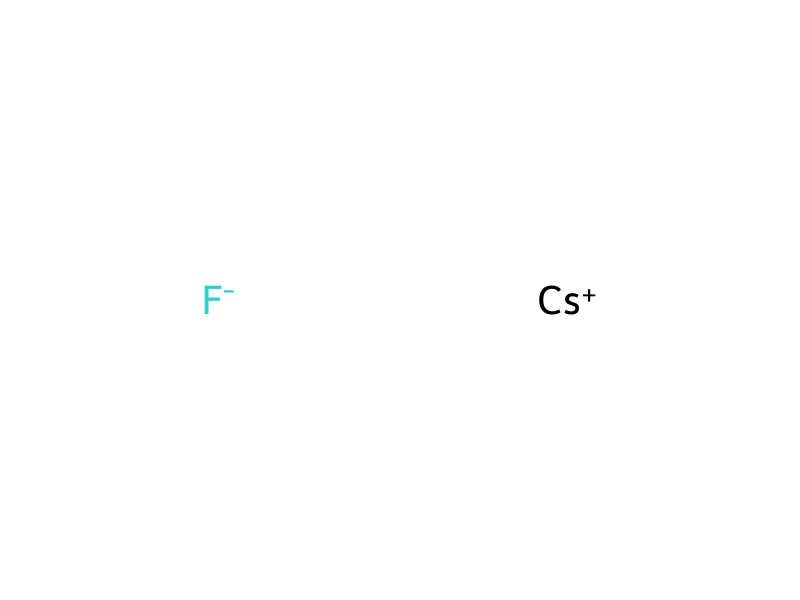
HCID 6344DichloromethaneHCID 25953Cesium fluorideHCID 16217654tert-butyl 4-(tetramethyl-1,3,2-dioxaborolan-2-yl)-1H-pyrazole-1-carboxylateHCID 593418366-[(6-bromo-1H-[1,2,3]triazolo[4,5-b]pyrazin-1-yl)methyl]-7-fluoroquinoline

Product 1

HCID 593419587-fluoro-6-{[6-(1H-pyrazol-4-yl)-1H-[1,2,3]triazolo[4,5-b]pyrazin-1-yl]methyl}quinoline
Yield 91.3%

Reagents, catalysts & solvents 3

HCID 44119782Bis(cyclopenta-1,4-dien-1-yl(diphenyl)phosphane);dichloropalladium;iron(2+)CatalystHCID 962WaterSolventHCID 80711,2-DimethoxyethaneSolvent

Conditions

Temperature
85 °C

Procedure

To a suspension of 6-[(6-bromo-1H-[1,2,3]triazolo[4,5-b]pyrazin-1-yl)methyl]-7-fluoroquinoline (250 mg, 0.696 mmol) and 4-(4,4,5,5-tetramethyl-1,3,2-dioxaborolan-2-yl)-pyrazole-1-carboxylic acid tert-butyl ester (225 mg, 0.766 mmol) in dimethoxyethane (8.0 ml) was added CsF (317 mg, 2.09 mmol) and water (1.05 ml) at R.T. After degassed several times, to the suspension, 1,1′-bis(diphenylphosphino)ferrocenedichloro palladium (11) 1:1 complex with CH2Cl2 (25.5 mg, 0.04 mmol) was added and the reaction mixture was degassed again. After stirring at 85° C. for 16 h, the reaction mixture was cooled down to R.T. diluted with water (10 ml) and filtered. The aqueous layer was extracted with CH2Cl2 (2×50 ml) EtOAc (1×10 ml). The combined the organic layer was dried with K2CO3 filtered and combined this with the solid filtered initially, and concentrated under reduced pressure. The resulting residue was purified via flash column chromatography eluted with 0-7% CH2Cl2:MeOH to give the desired product (220 mg 91%). 1H NMR (400 MHz, DMSO-d6) δ ppm 6.18 (s, 2H) 7.53 (dd, J=8.21, 4.17 Hz, 2H) 7.84 (d, J=11.37 Hz, 1H) 8.17 (d, J=8.59 Hz, 1H) 8.29 (s, 1H) 8.41-8.46 (m, 1H) 8.70 (s, 1H) 8.92 (dd, J=4.29, 1.77 Hz, 1H) 9.25 (s, 1H).

Workup

  1. customAfter degassed several times
  2. customthe reaction mixture was degassed again
  3. temperaturethe reaction mixture was cooled down to R.T.
  4. additiondiluted with water (10 ml)
  5. filtrationfiltered
  6. extractionThe aqueous layer was extracted with CH2Cl2 (2×50 ml) EtOAc (1×10 ml)
  7. dry with materialwas dried with K2CO3
  8. filtrationfiltered
  9. filtrationfiltered initially
  10. concentrationconcentrated under reduced pressure
  11. customThe resulting residue was purified via flash column chromatography
  12. washeluted with 0-7% CH2Cl2

Sources & evidence

ORD record
ord-7b9dd2b71ed845e29f044462bbd72a39
Source dataset
uspto-grants-2010_06
DOI
10.6084/m9.figshare.5104873.v1
Patent number
US07732604B2

Reaction notes

Loading…

On this pageParticipantsConditionsProcedureWorkupSources & evidenceReaction notes