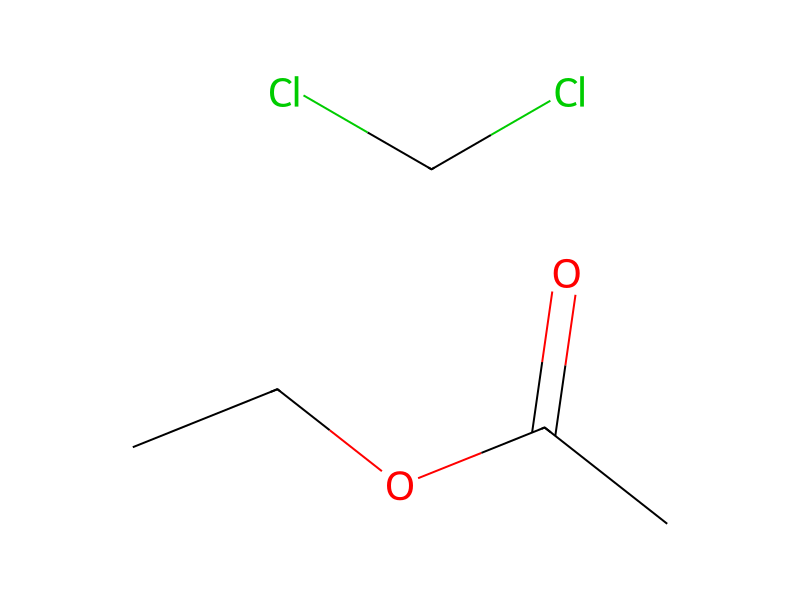
[NH2:1][C:2]1[C:3]([I:23])=[C:4]([CH2:18][O:19][C:20](=[O:22])[CH3:21])[C:5]([I:17])=[C:6]([C:15]=1[I:16])[C:7]([NH:9][CH2:10][CH:11]([OH:14])[CH2:12][OH:13])=[O:8].[C:24](OC(=O)C)(=[O:26])[CH3:25].C(Cl)Cl.[C:34](OCC)(=[O:36])[CH3:35]>N1C=CC=CC=1>[NH2:1][C:2]1[C:3]([I:23])=[C:4]([CH2:18][O:19][C:20](=[O:22])[CH3:21])[C:5]([I:17])=[C:6]([C:15]=1[I:16])[C:7]([NH:9][CH2:10][CH:11]([O:14][C:34](=[O:36])[CH3:35])[CH2:12][O:13][C:24](=[O:26])[CH3:25])=[O:8]5-Amino-3-acetoxymethyl-N-(2,3-dihydroxypropyl)-2,4,6-triiodobenzamide (2.13 g, 3.23 mmol) was dissolved in pyridine (12 ml). Acetic anhydride (10 ml) was added dropwise with efficient stirring. Stirring was continued at ambient temperature for 10 h. The reaction mixture was then evaporated to a solid residue, which was taken up in chloroform (70 ml). The organic phase was washed with aqueous hydrochloric acid (1M) until pH=2, then twice with water (40 ml) and last with a saturated solution of sodium hydrogen carbonate until pH=8-9. After drying (Na2SO4), the solvent was evaporated to yield a dark solid residue. This was taken up in a mixture of methylene chloride/ethyl acetate (90/10) and eluted through a pad of alumina. After evaporation of the solvent, 2.1 g (87%) of a white crystalline residue was left.