Reaction equation

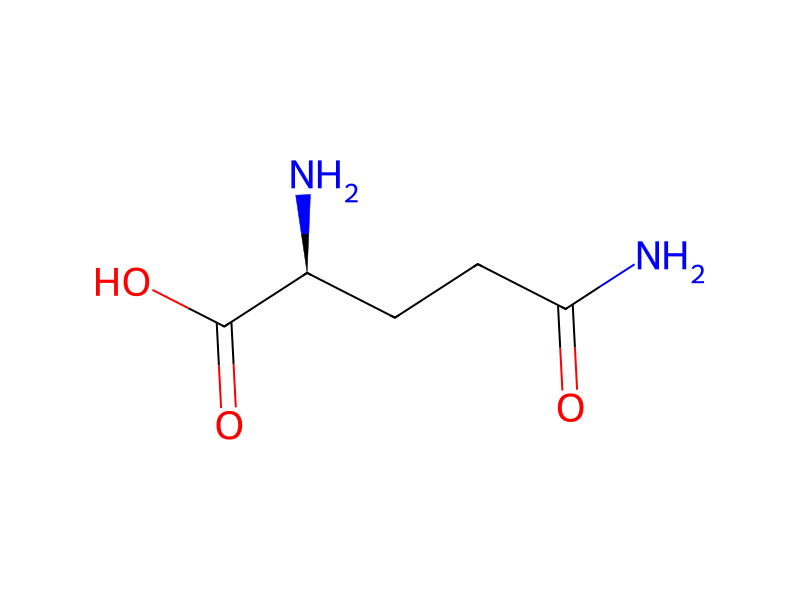
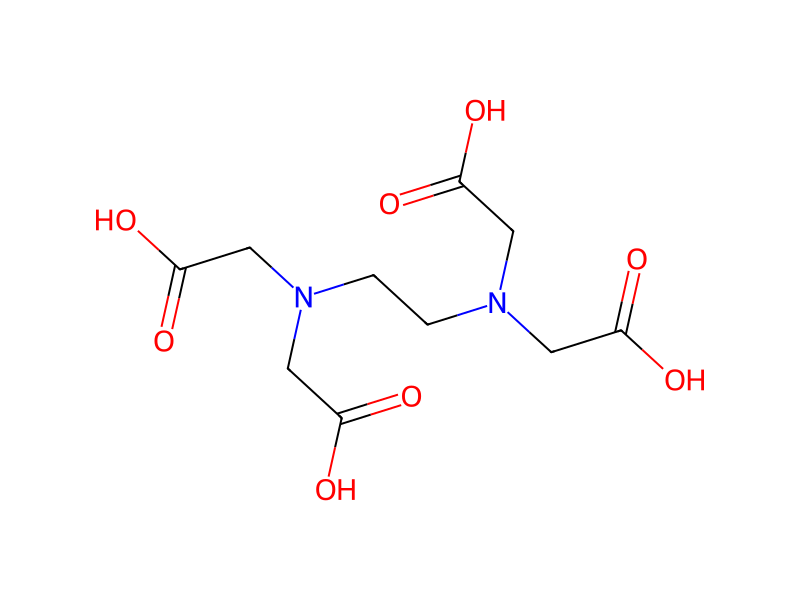
Cl.C[O:3][C:4](=O)[C@H:5]([CH3:7])[NH2:6].[NH2:9][C@H:10]([C:16]([OH:18])=[O:17])[CH2:11][CH2:12][C:13](=[O:15])[NH2:14].C(N(CC(O)=O)CC(O)=O)CN(CC(O)=O)CC(O)=O>B([O-])([O-])[O-]>[NH2:6][C@H:5]([C:4]([NH:9][C@H:10]([C:16]([OH:18])=[O:17])[CH2:11][CH2:12][C:13](=[O:15])[NH2:14])=[O:3])[CH3:7]Participants
5
Reactant 3

Product 1

Reagents, catalysts & solvents 1

Procedure
3 μl of the same enzyme fraction as used in Example 5 was added to 100 μl of 100 mM borate buffer (pH 9.0) containing 100 mM L-alanine methyl ester hydrochloride, 200 mM L-glutamine and 10 mM EDTA, and allowed to react at 18° C. As a result, as shown in FIG. 3, 83 mM L-alanyl-L-glutamine (L-Ala-L-Gln) was formed in the case of an enzyme-added lot, and the concentration of by-product L-Ala-L-Ala-L-Gln was 1.3 mM. On the other hand, there was scarcely any production of L-Ala-L-Gln observed in an enzyme-non-added lot, and the enzyme concentration was only about 0.07 mM after reacting for 120 minutes.
Workup
- customto react at 18° C
Sources & evidence
- ORD record
- ord-1b4406b554174c0997e716b5b5502a8a
- Source dataset
- uspto-grants-2010_06
- Patent number
- US07736876B2
Linked notes
Loading…