5-bromo-2-pyridin-3-yl-1H-indole → 2-pyridin-3-yl-1H-indole-5-carbonitrile
HRID 1630766
Reaction equation

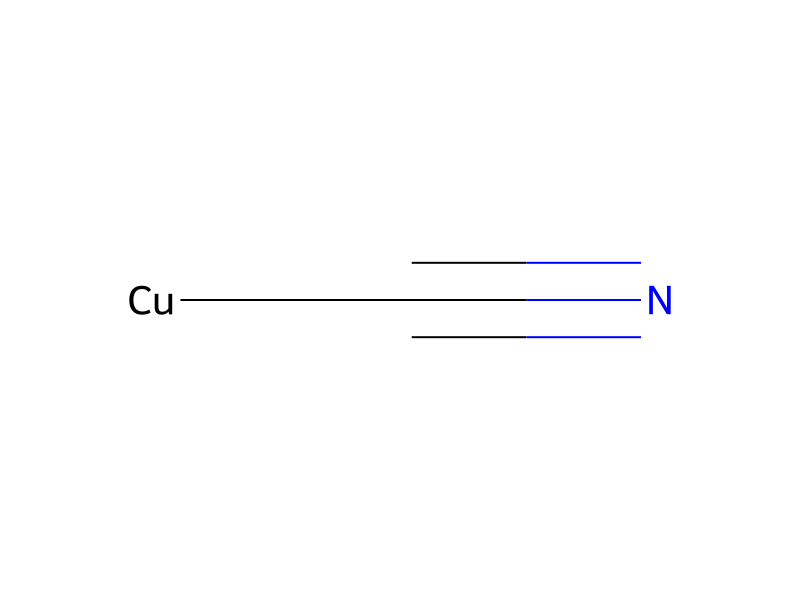
Br[C:2]1[CH:3]=[C:4]2[C:8](=[CH:9][CH:10]=1)[NH:7][C:6]([C:11]1[CH:12]=[N:13][CH:14]=[CH:15][CH:16]=1)=[CH:5]2.[Cu][C:18]#[N:19]>>[N:13]1[CH:14]=[CH:15][CH:16]=[C:11]([C:6]2[NH:7][C:8]3[C:4]([CH:5]=2)=[CH:3][C:2]([C:18]#[N:19])=[CH:10][CH:9]=3)[CH:12]=1Participants
3


Conditions
- Temperature
- 160 °C
Procedure
5-Bromo-2-pyridin-3-yl-1H-indole (7.0 g, 21.8 mmol) and copper (I) cyanide (2.3 g, 26.1 mmol) are placed in a round bottom flask which is flushed with N2. N-Methylpyrrolidinone (40 mL) is added via syringe. The resulting mixture is heated to 160° C. under N2 with vigorous stirring overnight. The mixture is cooled to room temperature and poured into 10% aqueous ammonia in saturated aqueous ammonium chloride (300 mL). The aqueous phase is extracted with dichloromethane (100 mL) five times. The combined organic phase is dried over sodium sulfate and concentrated. The residue is purified by silica gel flash chromatography (ethyl acetate-heptane, 0:1 to 1:0) to give 2-pyridin-3-yl-1H-indole-5-carbonitrile. 1H NMR (400 MHz, DMSO-d6) δ ppm 7.20 (s, 1H), 7.48 (dd, J=8.3, 1.5 Hz, 1H), 7.51-7.55 (m, 1H), 7.59 (d, J=8.6 Hz, 1H), 8.12 (s, 1H), 8.25-8.29 (m, 1H), 8.56 (dd, J=4.8, 1.5 Hz, 1H), 9.14 (d, J=1.8 Hz, 1H), 12.27 (s, 1H). HRMS (ESI) m/z 220.0869 [(M+H)+ Calcd for C14H9N3, 220.0875].