Acetic Anhydride → N-[4-(1,3-benzoxazol-2-yl)phenyl]acetamide
Reaction equation

[NH2:1][C:2]1[CH:7]=[CH:6][C:5]([C:8]2[O:9][C:10]3[CH:16]=[CH:15][CH:14]=[CH:13][C:11]=3[N:12]=2)=[CH:4][CH:3]=1.[C:17](OC(=O)C)(=[O:19])[CH3:18]>C1C=CC=CC=1>[C:17]([NH:1][C:2]1[CH:3]=[CH:4][C:5]([C:8]2[O:9][C:10]3[CH:16]=[CH:15][CH:14]=[CH:13][C:11]=3[N:12]=2)=[CH:6][CH:7]=1)(=[O:19])[CH3:18]Participants
4
Reactant 2

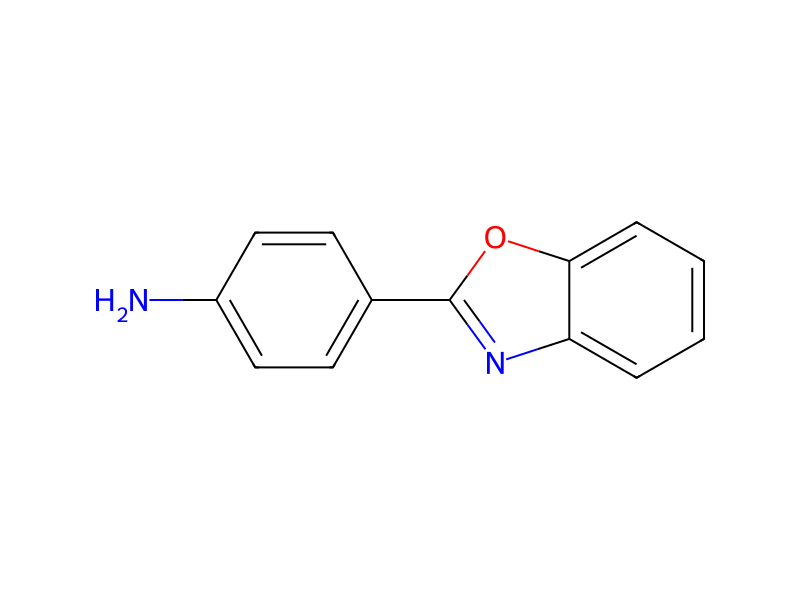
Product 1

Reagents, catalysts & solvents 1

Procedure
2-(4'-Aminophenyl)benzoxazole (1.0 g, 4.76 mmol) was treated with acetic anhydride (5 g) in benzene according to the above-described general procedure for acetylation. A red powder was afforded (0.9 g, 75%), m.p. 213.5-214.8° C.
Workup
- customA red powder was afforded (0.9 g, 75%), m.p. 213.5-214.8° C.
Sources & evidence
- ORD record
- ord-d55b321238df4014b4ca9a922e6a8c42
- Source dataset
- uspto-grants-2000_03
- Patent number
- US06034246
Reaction notes
Loading…