HomeMCPWorkbenchSkills
HomeWorkbenchNotificationsMe
llms.txt · MCP GuidePrivacy Policy · Terms of Service · Supportv1.8.3
  1. Home
  2. /Reaction

Acetic Acid → Tetrahydrophthalimide

HRID 1638918
Print

Reaction equation

HRID 1638918 reaction equation
C(OC1C=C(C(F)=CC=1Cl)[NH2:8])C=C.[CH2:14]1[CH:19]2[C:20](O[C:23](=[O:24])[CH:18]2[CH2:17][CH:16]=[CH:15]1)=[O:21].C(O)(=O)C>O>[C:23]1(=[O:24])[NH:8][C:20](=[O:21])[C:19]2[CH2:14][CH2:15][CH2:16][CH2:17][C:18]1=2
ParticipantsProcedureWorkupSources & evidenceReaction notes

Participants

5

Reactant 3

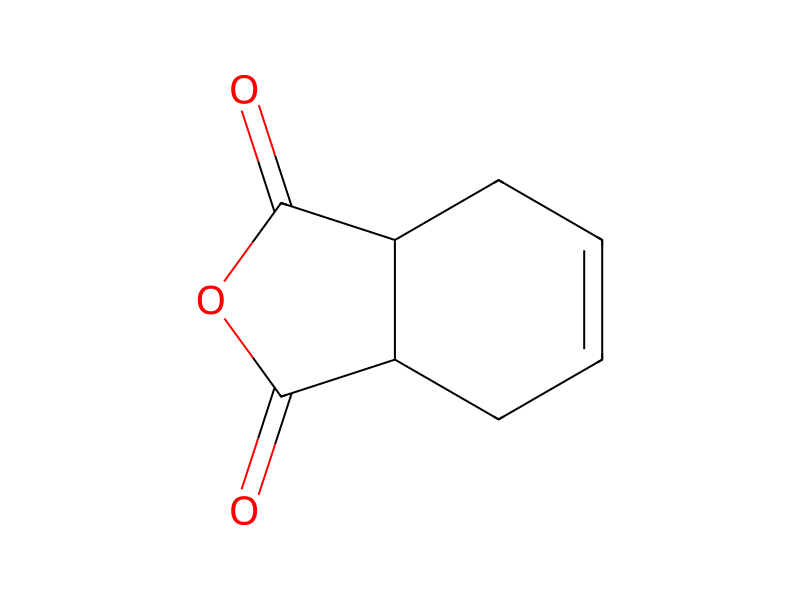
HCID 176Acetic AcidHCID 6810Tetrahydrophthalic anhydrideHCID 132729265-Allyloxy-4-chloro-2-fluoroaniline

Product 1

HCID 34024Tetrahydrophthalimide

Reagents, catalysts & solvents 1

HCID 962WaterSolvent

Procedure

A mixture of 9.0 g of 19A, 6.8 g of THPA and 100 mL of glacial acetic acid was heated at reflux temperature for 4 hours. The resulting mixture was cooled to room temperature, poured into 450 mL of water and extracted with ether. The extract phase was washed with water, dried (Na2SO4), and filtered, and the solvent was evaporated from the filtrate. The residue was flash-chromatographed on silica gel, with a 15:85 v:v mixture of ethyl acetate and hexane as eluent, to give N-(3-allyloxy)-4-chloro-6-fluorophenyl)-3,4,5,6-tetrahydrophthalimide (19B), as an orange oil.

Workup

  1. temperaturewas heated
  2. temperatureat reflux temperature for 4 hours
  3. extractionextracted with ether
  4. washThe extract phase was washed with water
  5. dry with materialdried (Na2SO4)
  6. filtrationfiltered
  7. customthe solvent was evaporated from the filtrate
  8. customThe residue was flash-chromatographed on silica gel, with a 15:85 v
  9. additionv mixture of ethyl acetate and hexane as eluent

Sources & evidence

ORD record
ord-946ff5621a524eb495c5bdd83bdce012
Source dataset
uspto-grants-1989_11
DOI
10.6084/m9.figshare.5104873.v1
Patent number
US04881967

Reaction notes

On this pageParticipantsProcedureWorkupSources & evidenceReaction notes