Cyanogen Bromide → 1-Cyano-3-(4-fluorophenacyl)piperidine
HRID 1657822
Reaction equation

[CH3:1][N:2]1[CH2:7][CH2:6][CH2:5][CH:4]([CH2:8][C:9]([C:11]2[CH:16]=[CH:15][C:14]([F:17])=[CH:13][CH:12]=2)=[O:10])[CH2:3]1.[N:18]#CBr>C1C=CC=CC=1>[C:1]([N:2]1[CH2:7][CH2:6][CH2:5][CH:4]([CH2:8][C:9]([C:11]2[CH:12]=[CH:13][C:14]([F:17])=[CH:15][CH:16]=2)=[O:10])[CH2:3]1)#[N:18]Participants
4
Reactant 2
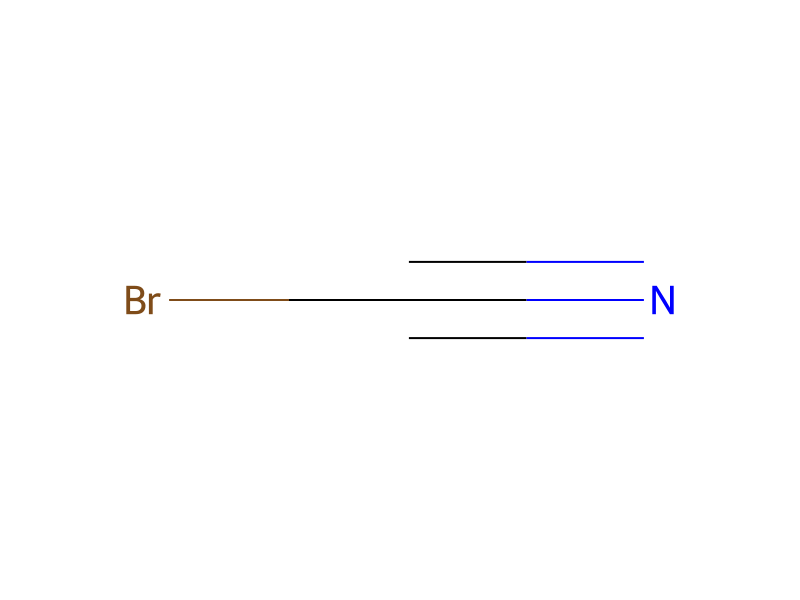

Product 1

Reagents, catalysts & solvents 1

Procedure
The above reaction scheme generally follows the procedure of E. L. Engelhardt, J. Med. Chem., 11, 325 (1968). Briefly, 1-methyl-3-(4-fluorophenacyl)piperidine in benzene solution is treated at essentially ambient temperature with excess cyanogen bromide under a nitrogen purge. Volatile materials are distilled under reduced pressure and the residue is dissolved in chloroform. The chloroform solution is washed, dried, and filtered. Distillation of the chloroform gives 1-cyano-3-(4-fluorophenacyl)piperidine. Hydrolysis of the cyano compound with hydrochloric acid-containing aqueous acetic acid gives the 1-carbamoyl derivative and the completely hydrolyzed and decarboxylated piperidine derivative (wherein the cyano group effectively is replaced with hydrogen). Increasing the amount of hydrochloric acid employed and increasing reaction time appear to favor complete hydrolysis and decarboxylation.