Acetoxyacetyl chloride → acetic acid [4-(2,4-dioxo-4H-benzo[d][1,3]oxazin-1-ylmethyl)-pyridin-2-ylcarbamoyl]-methyl ester
HRID 1663174
Reaction equation
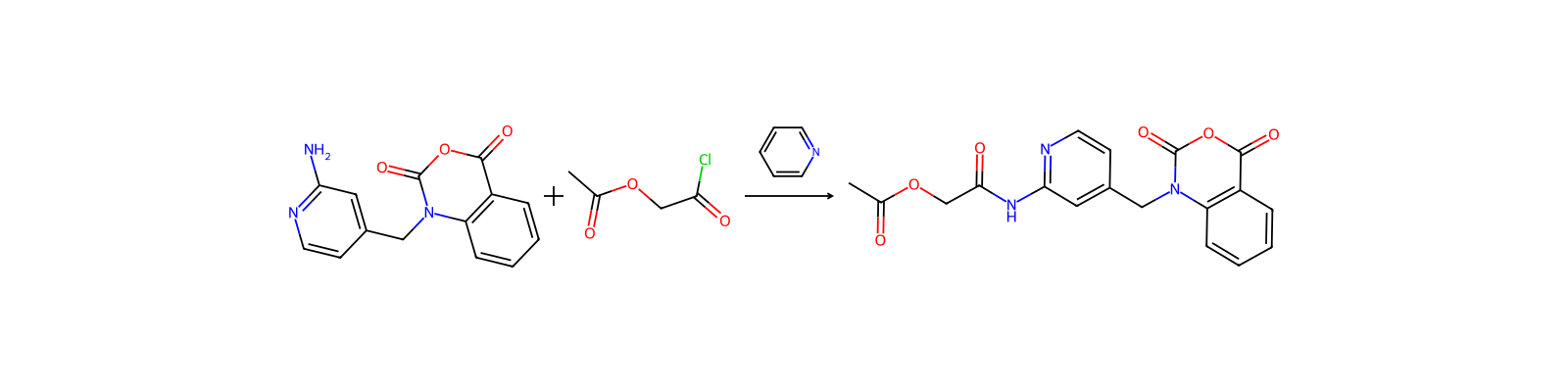
[NH2:1][C:2]1[CH:7]=[C:6]([CH2:8][N:9]2[C:14]3[CH:15]=[CH:16][CH:17]=[CH:18][C:13]=3[C:12](=[O:19])[O:11][C:10]2=[O:20])[CH:5]=[CH:4][N:3]=1.[C:21]([O:24][CH2:25][C:26](Cl)=[O:27])(=[O:23])[CH3:22]>N1C=CC=CC=1>[O:20]=[C:10]1[N:9]([CH2:8][C:6]2[CH:5]=[CH:4][N:3]=[C:2]([NH:1][C:26]([CH2:25][O:24][C:21](=[O:23])[CH3:22])=[O:27])[CH:7]=2)[C:14]2[CH:15]=[CH:16][CH:17]=[CH:18][C:13]=2[C:12](=[O:19])[O:11]1Participants
4



Procedure
To a stirred solution of 1-(2-amino-pyridin-4-ylmethyl)-1H-benzo[d][1,3]oxazine-2,4-dione (600 mg, see preparation 7b) in pyridine (5 ml) was added acetoxyacetyl chloride (0.29 ml). The reaction mixture was stirred at room temperature for 30 minutes. The solvent was evaporated under reduced pressure. The remaining oil was dissolved in EtOAc and washed with water and brine. The organic layer was concentrated to ca. 10 ml under reduced pressure. The resulting solid material was isolated by filtration and dried in vacuo, affording acetic acid [4-(2,4-dioxo-4H-benzo[d][1,3]oxazin-1-ylmethyl)-pyridin-2-ylcarbamoyl]-methyl ester.