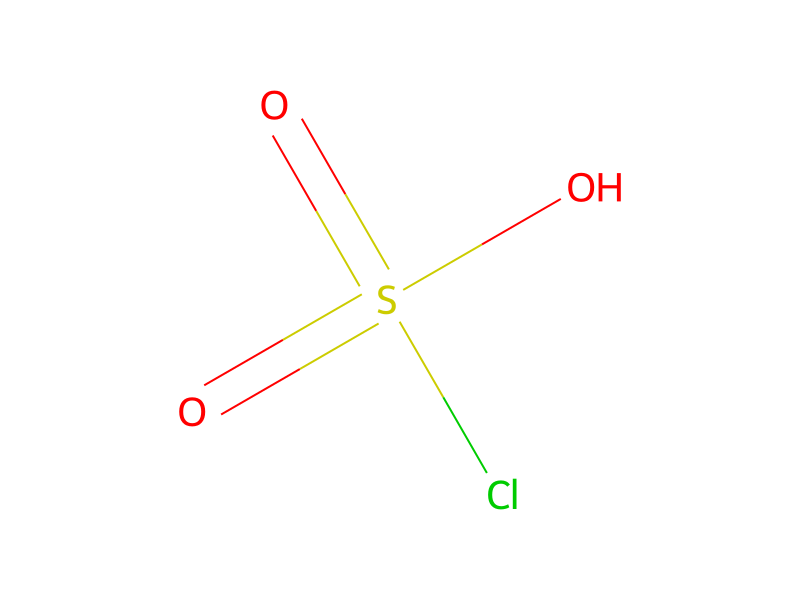
Chlorosulfonic acid → 3-Bromo-5-(3-cyano-2-methyl-5-oxo-7-propyl-1,4,5,6,7,8-hexahydro-quinolin-4-yl)-2-hydroxy-benzenesulfonyl chloride
HRID 1663398
Reaction equation

[Cl:1][S:2]([OH:5])(=O)=[O:3].[Br:6][C:7]1[CH:8]=[C:9]([CH:14]2[C:23]3[C:22](=[O:24])[CH2:21][CH:20]([CH2:25][CH2:26][CH3:27])[CH2:19][C:18]=3[NH:17][C:16]([CH3:28])=[C:15]2[C:29]#[N:30])[CH:10]=[CH:11][C:12]=1[OH:13]>>[Br:6][C:7]1[C:12]([OH:13])=[C:11]([S:2]([Cl:1])(=[O:5])=[O:3])[CH:10]=[C:9]([CH:14]2[C:23]3[C:22](=[O:24])[CH2:21][CH:20]([CH2:25][CH2:26][CH3:27])[CH2:19][C:18]=3[NH:17][C:16]([CH3:28])=[C:15]2[C:29]#[N:30])[CH:8]=1Participants
3


Procedure
To 47 ml of chlorosulfonic acid, cooled to −10° C. in a pressure vessel under a nitrogen atmosphere, was slowly added 4-(3-bromo-4-hydroxy-phenyl)-2-methyl-5-oxo-7-propyl-1,4,5,6,7,8-hexahydro-quinoline-3-carbonitrile (20.25 g). The mixture was allowed to reach room temperature. After stirring for 17 h, the mixture was poured onto 800 ml of crushed ice and extracted with ethyl acetate. The organic layer was dried (MgSO4), filtered and concentrated in vacuo. The residue was triturated with ethyl acetate. The solids were collected and dried in vacuo.