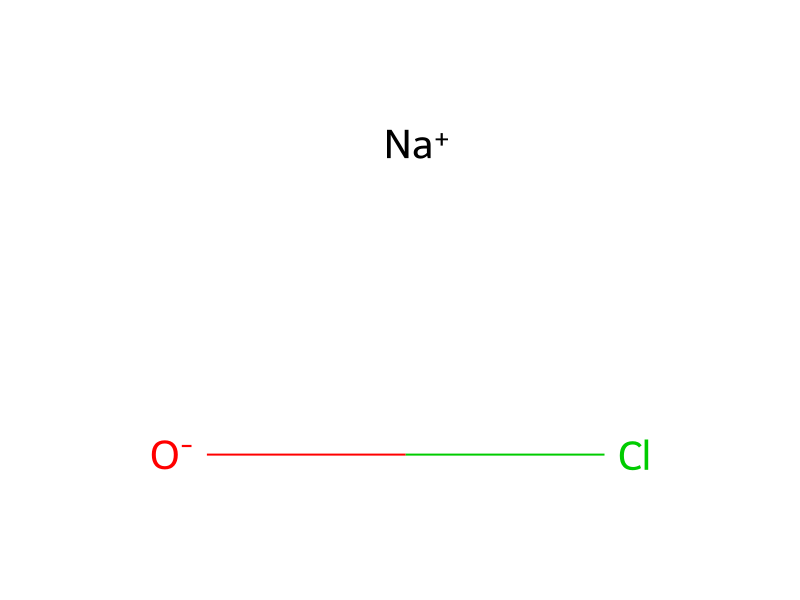
A solution of sodium hydroxide (4 grams (g)) in water (15 milliliters (ml)) was added to a solution of 4,4'-dichlorocarbanilide (14.1 g, 0.05 mole) in methanol (300 ml). Sodium hypochlorite solution (100 ml, 1 N in 0.1 molar sodium hydroxide) was then added dropwise over 30 minutes to the vigorously stirred reaction mixture, maintaining the temperature below 35° C. by means of an ice bath. Stirring was continued at room temperature for 5 hours after which the small amount of solid present was removed by filtration. The filtrate was evaporated to a volume of about 50 ml, diluted with water (500 ml), and subsequently acidified to a pH of 3 with hydrochloric acid. The product was then filtered, washed with water, dried at 80° C. and identified as 6-chloro-1-(4-chlorophenyl)-2-benzimidazolinone by infrared spectra. The product recovery was 66 percent of theoretical and the product melted at 239° C. (recrystallized from toluene).