Reaction equation

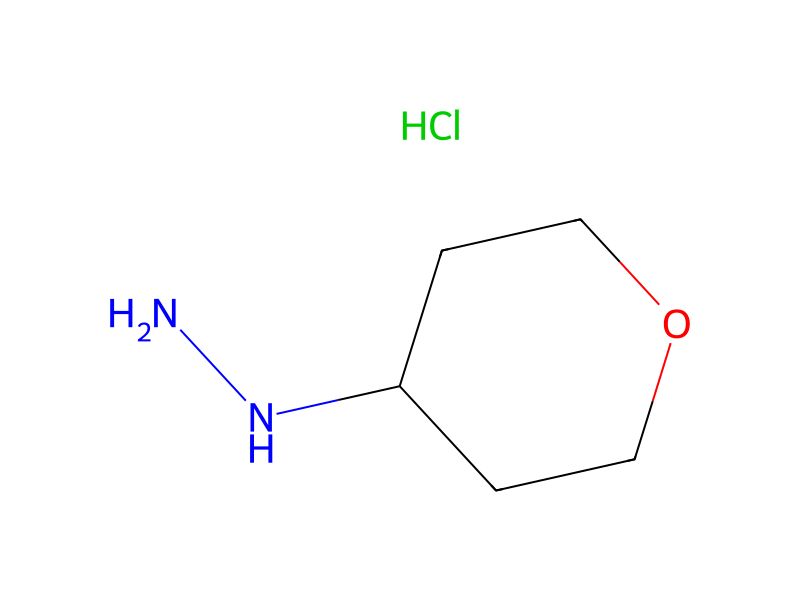
[Cl:1][C:2]1[CH:7]=[C:6]([F:8])[CH:5]=[CH:4][C:3]=1[S:9]([C@H:12]1[CH2:16][N:15]([C:17](=S)[CH2:18][C:19](=O)[CH3:20])[C@H:14]([C:23]([O:25][CH3:26])=[O:24])[CH2:13]1)(=[O:11])=[O:10].Cl.[O:28]1[CH2:33][CH2:32][CH:31]([NH:34][NH2:35])[CH2:30][CH2:29]1>>[CH3:26][O:25][C:23]([C@@H:14]1[CH2:13][C@@H:12]([S:9]([C:3]2[CH:4]=[CH:5][C:6]([F:8])=[CH:7][C:2]=2[Cl:1])(=[O:10])=[O:11])[CH2:16][N:15]1[C:17]1[N:34]([CH:31]2[CH2:32][CH2:33][O:28][CH2:29][CH2:30]2)[N:35]=[C:19]([CH3:20])[CH:18]=1)=[O:24]Participants
3


Procedure
In analogy to the procedure described in example 192 h, (2S,4R)-methyl 4-(2-chloro-4-fluorophenylsulfonyl)-1-(3-oxobutanethioyl)pyrrolidine-2-carboxylate was reacted with (tetrahydro-pyran-4-yl)-hydrazine hydrochloride (CAS Reg. No. 116312-69-7) to give the title compound as yellow solid. MS (ESI): m/z=486.2 [M+H]+.
Sources & evidence
- ORD record
- ord-552412450de2454085430502de1bf2c1
- Source dataset
- uspto-grants-2012_04
- Patent number
- US08163793B2
Linked notes
Loading…