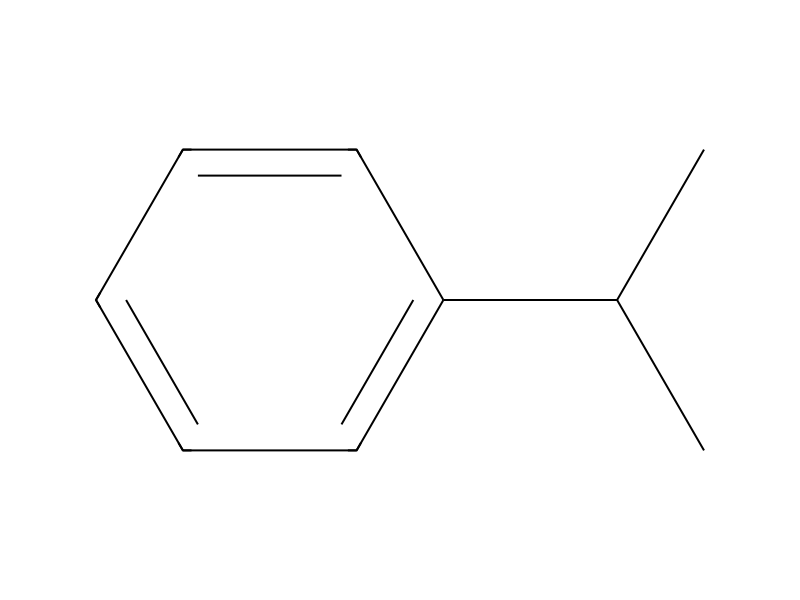
Phenol → Cumene
HRID 1720129
Reaction equation

[CH:1]1[CH:6]=[C:5](Cl)[CH:4]=[C:3](NN=C(C#N)C#N)[CH:2]=1.[C:15]1([OH:21])[CH:20]=[CH:19][CH:18]=[CH:17][CH:16]=1>>[C:15]1([OH:21])[CH:20]=[CH:19][CH:18]=[CH:17][CH:16]=1.[C:5]1([CH:15]([CH3:20])[CH3:16])[CH:4]=[CH:3][CH:2]=[CH:1][CH:6]=1Participants
4


Procedure
According to A.C. CCCP 1235860 (1986) before decomposition, the phenol tar is diluted by high-molecular weight aromatic compounds such as Baltic shale oil (grade kerogen -70) weight ratio of tar to shale oil 1.3/2.5. Process conditions are: pressure 3-7 MP, temperature 400°-430 ° C., time 5-20 min. Liquid products obtained are separated by distillation. This process takes place under relatively severe conditions and gives a poor yield of phenol (4-5% ) and cumene (10-15% ). In addition it requires the addition of shale oil.