HomeMCPWorkbenchSkills
HomeWorkbenchNotificationsMe
llms.txt · MCP GuidePrivacy Policy · Terms of Service · Supportv1.8.3
  1. Home
  2. /Reaction

Pyridine → ethyl N-(4-chloro-2-fluoro-5-isopropoxyphenyl)-carbamate

HRID 1722984
Print

Reaction equation

HRID 1722984 reaction equation
Cl[C:2]([O:4][CH2:5][CH3:6])=[O:3].[Cl:7][C:8]1[C:14]([O:15][CH:16]([CH3:18])[CH3:17])=[CH:13][C:11]([NH2:12])=[C:10]([F:19])[CH:9]=1.N1C=CC=CC=1>C(Cl)Cl>[Cl:7][C:8]1[C:14]([O:15][CH:16]([CH3:18])[CH3:17])=[CH:13][C:11]([NH:12][C:2](=[O:3])[O:4][CH2:5][CH3:6])=[C:10]([F:19])[CH:9]=1
ParticipantsProcedureWorkupSources & evidenceReaction notes

Participants

5

Reactant 3

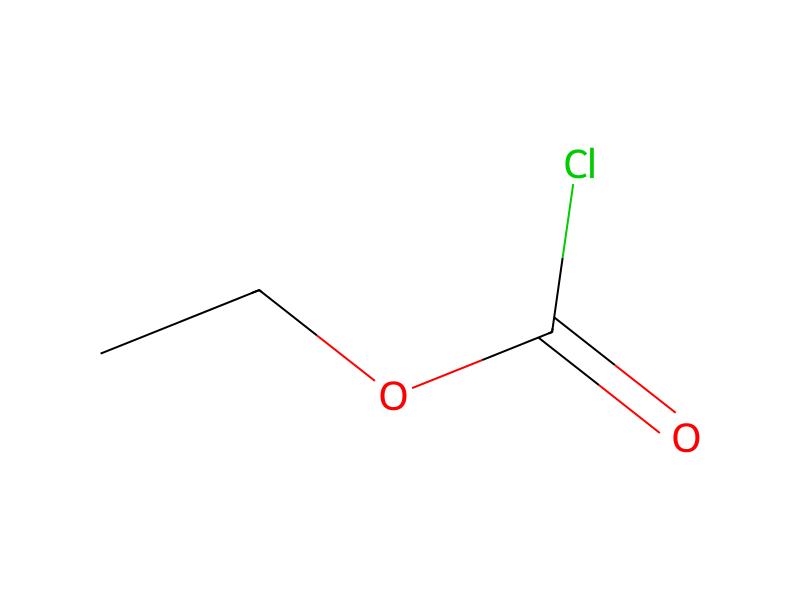
HCID 1049PyridineHCID 10928Ethyl chloroformateHCID 158649Benzenamine, 4-chloro-2-fluoro-5-(1-methylethoxy)-

Product 1

HCID 20026143ethyl N-(4-chloro-2-fluoro-5-isopropoxyphenyl)-carbamate

Reagents, catalysts & solvents 1

HCID 6344DichloromethaneSolvent

Procedure

12.8 g of ethyl chloroformate are added while stirring to a solution of 20 g of 4-chloro-2-fluoro-5-isopropoxyaniline in 100 ml of methylene chloride at room temperature. 9.4 g of pyridine are subsequently added dropwise during 20 minutes at 20° C. while stirring and cooling. The reaction mixture is stirred for 20 minutes, washed three times with in each case 200 ml of a solution of 20 ml of 2N hydrochloric acid in 200 ml of water, dried over anhydrous sodium sulphate and evaporated to dryness under reduced pressure. There is obtained ethyl N-(4-chloro-2-fluoro-5-isopropoxyphenyl)-carbamate, m.p. 89°-91° C.

Workup

  1. temperaturecooling
  2. stirringThe reaction mixture is stirred for 20 minutes
  3. washwashed three times with in each case 200 ml of a solution of 20 ml of 2N hydrochloric acid in 200 ml of water
  4. dry with materialdried over anhydrous sodium sulphate
  5. customevaporated to dryness under reduced pressure

Sources & evidence

ORD record
ord-bd4e217845554cfe96ccae5c5490f16d
Source dataset
uspto-grants-1989_08
DOI
10.6084/m9.figshare.5104873.v1
Patent number
US04859229

Reaction notes

On this pageParticipantsProcedureWorkupSources & evidenceReaction notes