HomeMCPSkillsWorkbenchOpenChem
HomeWorkbenchNotificationsMe
llms.txt · skill.md · MCP GuidePrivacy Policy · Terms of Service · Supportv1.8.4
  1. Home
  2. /Reaction

Epichlorohydrin → 4-Diethylaminobenzaldehyde N-2,3-epoxvpropyl-N-phenylhydrazone

HRID 1744180
Print

Reaction equation

[OH-].[K+].S([O-])([O-])(=O)=O.[Na+].[Na+].[C:10]1([NH:16][N:17]=[CH:18][C:19]2[CH:24]=[CH:23][C:22]([N:25]([CH2:28][CH3:29])[CH2:26][CH3:27])=[CH:21][CH:20]=2)[CH:15]=[CH:14][CH:13]=[CH:12][CH:11]=1.[CH2:30]([CH:32]1[O:34][CH2:33]1)Cl>[O-]S([O-])(=O)=O.[Na+].[Na+]>[O:34]1[CH2:33][CH:32]1[CH2:30][N:16]([C:10]1[CH:15]=[CH:14][CH:13]=[CH:12][CH:11]=1)[N:17]=[CH:18][C:19]1[CH:20]=[CH:21][C:22]([N:25]([CH2:28][CH3:29])[CH2:26][CH3:27])=[CH:23][CH:24]=1
ParticipantsProcedureWorkupSources & evidenceReaction notes

Participants

6

Reactant 4

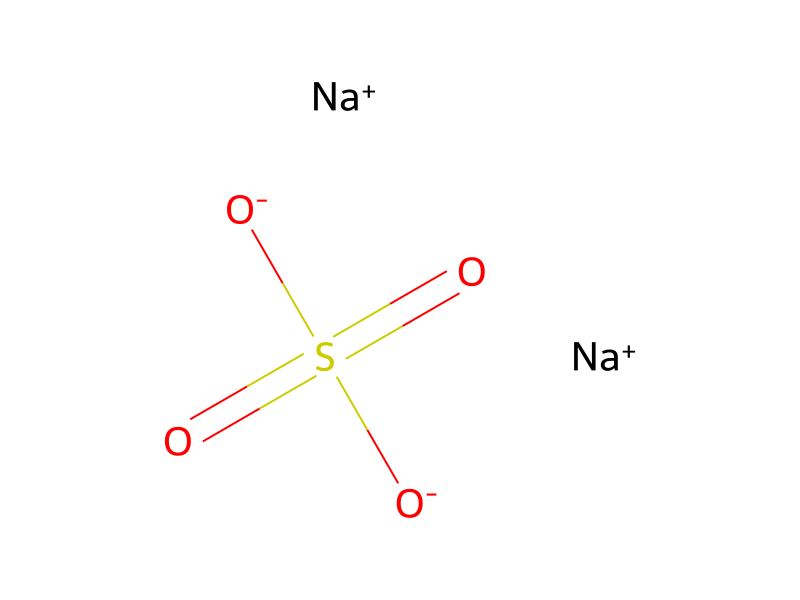
HCID 7835EpichlorohydrinHCID 14797Potassium Hydroxide4×HCID 24436Sodium Sulfate2×HCID 6224694-(Diethylamino)benzaldehyde phenylhydrazone

Product 1

HCID 40800804-Diethylaminobenzaldehyde N-2,3-epoxvpropyl-N-phenylhydrazoneYield 80.4%

Reagents, catalysts & solvents 1

HCID 24436Sodium SulfateCatalyst2×

Procedure

A mixture of potassium hydroxide powder (KOH, 85%, 198 g, 3 mol,) and anhydrous sodium sulfate (Na2SO4, 51 g, 0.369 mol) was added in three stages to a mixture of 4-(diethylamino)benzaldehyde N-phenylhydrazone (267.4 g, 1 mol) and epichlorohydrin (1.5 mol), while keeping the reaction mixture at 20–25° C.: stage quantities added were 33 g of Na2SO4 and 66 g of KOH initially; 9.9 g of Na2SO4 and 66 g of KOH after 1 hour of reaction; and 9.9 g of Na2SO4 and 66 g of KOH after 2 hours of reaction. The reaction mixture was stirred vigorously at 35–40° C. until the starting hydrazone disappeared (approx. 4–5 hours). Subsequently, the mixture was cooled to room temperature, and the solids were removed by filtration. The liquid organic phase was treated with diethyl ether and washed with distilled water until the washed water was neutral. The organic layer was dried over anhydrous magnesium sulfate, treated with activated charcoal, and filtered. The solvent and excess epichlorohydrin were removed by evaporation in a rotory evaporator. The residue was recrystallized from diethyl ether and the crystals that formed upon standing were filtered off and washed with 2-propanol to give 260 g of the product (80.4% yield). The melting point was found to be 79–80.5° C. (recrystallized from diethyl ether). The 1H NMR spectrum (250 MHz) of the product in CDCl3 was characterized by the following chemical shifts (δ, ppm): 7.7–6.7 (m, 8H, Ar, CH═N); 6.6 (d, 2H, 2-H, 6-H of p-Ph); 4.4–3.6 (m, 2H, NCH2CH); 3.6–3.0 (m, 5H, CH2CH3, CH2CHCH2); 2.75 (m, 1H, ABX, cis-HA of CH2O); 2.55 (m, ABX, trans-HB of CH2O); and 1.1 (t, J=7.0 Hz, 6H, CH3).

Workup

  1. customat 20–25° C.
  2. additionstage quantities added
  3. custom(approx. 4–5 hours)
  4. customthe solids were removed by filtration
  5. additionThe liquid organic phase was treated with diethyl ether
  6. washwashed with distilled water until the washed water
  7. dry with materialThe organic layer was dried over anhydrous magnesium sulfate
  8. additiontreated with activated charcoal
  9. filtrationfiltered
  10. customThe solvent and excess epichlorohydrin were removed by evaporation in a rotory evaporator
  11. customThe residue was recrystallized from diethyl ether
  12. customthe crystals that formed
  13. filtrationupon standing were filtered off
  14. washwashed with 2-propanol

Sources & evidence

ORD record
ord-81a55d166c33485cbd982e931c1ee006
Source dataset
uspto-grants-2006_03
DOI
10.6084/m9.figshare.5104873.v1
Patent number
US07014968B2

Reaction notes

On this pageParticipantsProcedureWorkupSources & evidenceReaction notes