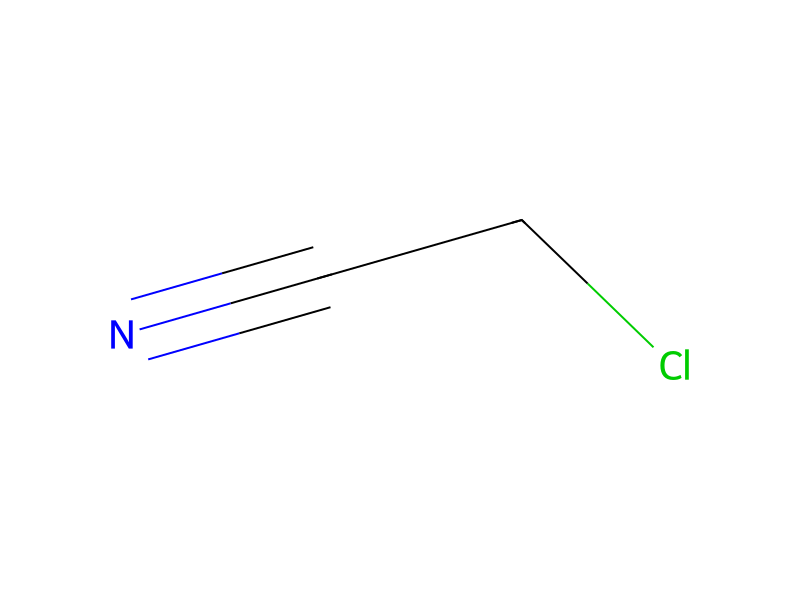
[CH2:1]([NH:9][CH2:10][CH2:11][CH2:12][CH2:13][CH2:14][CH2:15][CH2:16][CH3:17])[CH2:2][CH2:3][CH2:4][CH2:5][CH2:6][CH2:7][CH3:8].C(=O)([O-])[O-].[Na+].[Na+].C(O)C.Cl[CH2:28][C:29]#[N:30]>CO>[CH2:10]([N:9]([CH2:28][C:29]#[N:30])[CH2:1][CH2:2][CH2:3][CH2:4][CH2:5][CH2:6][CH2:7][CH3:8])[CH2:11][CH2:12][CH2:13][CH2:14][CH2:15][CH2:16][CH3:17]73.9 g (0.3 mol) of di-n-octylamine were initially introduced together with 31.8 g (0.3 mol) of sodium carbonate into 240 ml of absolute ethanol. At room temperature, 22.9 g (0.3 mol) of chloroacetonitrile were added and the mixture was stirred at reflux until starting material could no longer be detected by means of thin-layer chromatography (stationary phase: silica gel; mobile phase: methanol). The reaction mixture was filtered off and the filtrate was evaporated to dryness on a rotary evaporator. The residue was subjected to fractional distillation. At 145° C. and 0.04 mbar a fraction is obtained which is pure according to NMR spectroscopy. 58.4 g (0.21 mol) of di-n-octylaminoacetonitrile were isolated in the form of a clear liquid, corresponding to a yield of 69%.