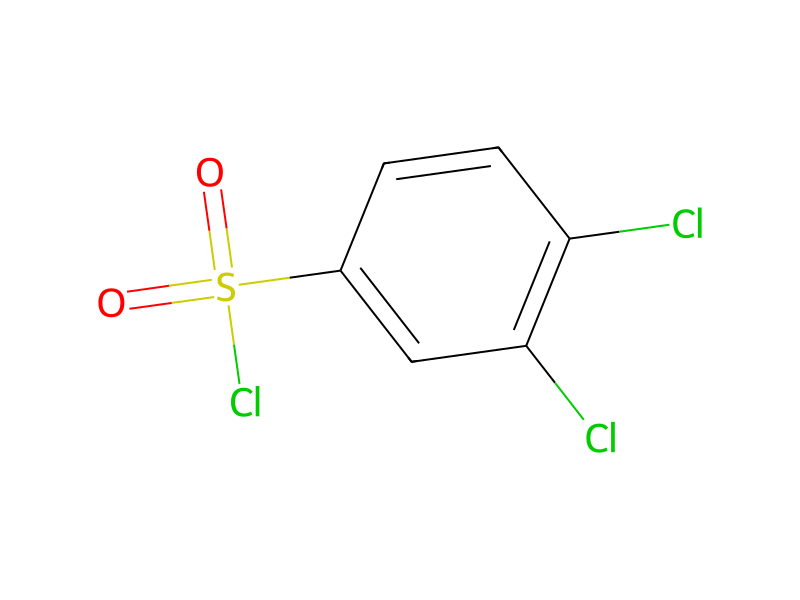
To a solution of 3,4-dichlorobenzenesulfonyl chloride (1.84 g, 7.5 mmol) in 35 mL of dry pyridine was added 2.5 g (7 mmol) of 4-(aminomethyl) -1-[[2-(diethylamino)ethyl]amino]-thioxanthen-9-one (prepared by the method described in Example 4) under nitrogen and the reaction mixture was stirred at room temperature for 15 min. and then was allowed to stand for approximately 72 hours. The reaction mixture was poured into 75 mL of water containing 0.75 g of NaOH, and extracted into chloroform. The organic layer was washed with water (2×) and brine, and dried over sodium sulfate. Chloroform was removed in vacuo, the residue was recrystallized from ethanol to afford 1.24 g of N-[[1-[[2-(diethylamino) ]ethyl]amino]-9-oxothioxanthen-4-yl]methyl]-3,4-dichlorobenzenesulfonamide, m.p. 95° C. (dec.). The free base was dissolved in methanol and treated with methanesulfonic acid in methanol to afford the methanesulfonate.1/2hydrate, m.p. 55° C. (dec.).