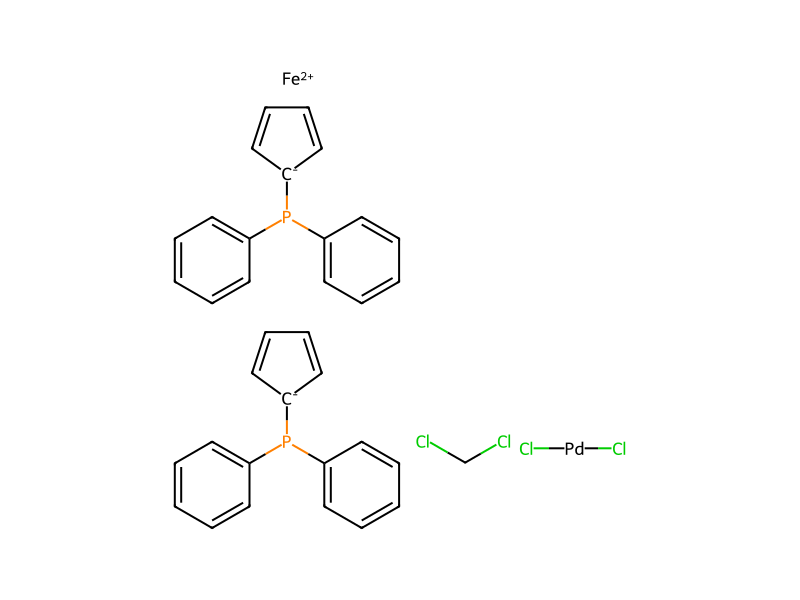
Br[C:2]1[CH:7]=[CH:6][N:5]=[C:4]([S:8][CH3:9])[N:3]=1.[F:10][C:11]1[CH:16]=[C:15](B(O)O)[CH:14]=[CH:13][N:12]=1.C([O-])([O-])=O.[Na+].[Na+]>O1CCOCC1.O.C1C=CC(P(C2C=CC=CC=2)[C-]2C=CC=C2)=CC=1.C1C=CC(P(C2C=CC=CC=2)[C-]2C=CC=C2)=CC=1.Cl[Pd]Cl.[Fe+2].C(Cl)Cl>[F:10][C:11]1[CH:16]=[C:15]([C:2]2[CH:7]=[CH:6][N:5]=[C:4]([S:8][CH3:9])[N:3]=2)[CH:14]=[CH:13][N:12]=1A suspension of 4-bromo-2-(methylthio)pyrimidine (7.00 g, 34.1 mmol), 2-fluoropyridin-4-ylboronic acid (5.05 g, 35.8 mmol), Na2CO3 (10.9 g, 102 mmol) and Pd(dppf)Cl2 CH2Cl2 (1.40 g, 1.71 mmol) in dioxane/H2O (100 mL; 1:1) was heated to 85° C. under an Ar balloon for 2 hours. The reaction mixture was cooled to room temperature and concentrated. The residue was diluted with ethyl acetate (200 mL) and water (100 mL). The layers were separated, and the aqueous layer was extracted with ethyl acetate (1×). The organics were dried, filtered and concentrated. The crude product was purified via column chromatography, eluting with hexanes/ethyl acetate (3:1) to give 4-(2-fluoropyridin-4-yl)-2-(methylthio)pyrimidine (6.83 g, 90%) as a solid. 1H NMR (400 MHz, (CD3)2SO) δ 8.85 (d, J=5.2 Hz, 1H), 8.46 (d, J=5.2 Hz, 1H), 8.11 (m, 1H), 7.96 (d, J=5.2 Hz, 1H), 7.92 (s, 1H), 2.62 (s, 3H); m/z (APCI-pos) M+1=222.1.
Loading…