Phenol → HCID 11188003, compound
HRID 1783277
Reaction equation

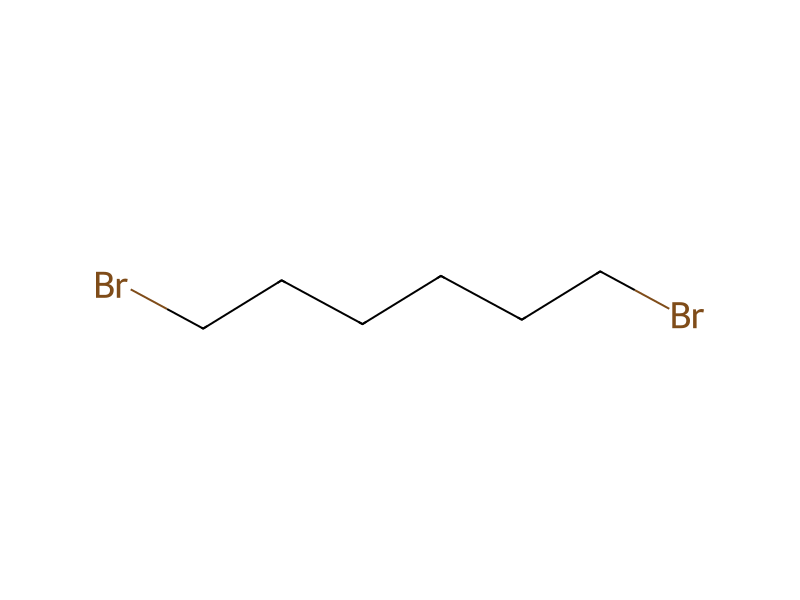
[OH:1][C:2]1[CH:7]=[CH:6][C:5]([N:8]=[N:9][C:10]2[CH:15]=[CH:14][C:13]([CH3:16])=[CH:12][CH:11]=2)=[CH:4][CH:3]=1.[Br:17][CH2:18][CH2:19][CH2:20][CH2:21][CH2:22][CH2:23]Br.OC1C=CC=CC=1>CC(C)=O>[Br:17][CH2:18][CH2:19][CH2:20][CH2:21][CH2:22][CH2:23][O:1][C:2]1[CH:3]=[CH:4][C:5]([N:8]=[N:9][C:10]2[CH:15]=[CH:14][C:13]([CH3:16])=[CH:12][CH:11]=2)=[CH:6][CH:7]=1Participants
5
Reactant 3


Product 1

Reagents, catalysts & solvents 1

Procedure
A 2 l three-neck flask equipped with a mechanical stirrer was charged with 42.4 g (0.2 mol) of 4-hydroxy-4′-methylazobenzene synthesized in the same manner as in the Example, 448 g (2 mol) of 1,6-dibromohexane and 212 g (1.5 mol) of potassium carbonate anhydride. To the mixture was added 800 ml of acetone and the resulting mixture was suspended by stirring. The reaction system was heated until acetone was refluxed to react hydroxybenzene with bromoalkane. After the reaction was continued for 20 hours, insoluble salts were separated by filtration and removed. The system was concentrated to a volume of about ⅓ by using a rotary evaporator. When the system was cooled in a freezing chamber, 4-(6-bromohexyloxy)-4′-methylazobenzene was produced as a crystal. After the generated product was subjected to filtration, it was washed with a small amount of cool acetone, cool ether and n-hexane in this order and then dried under reduced pressure to obtain 38.1 g of crude 4-(6-bromohexyloxy)-4′-methylazobenzene (yield: 50.8%). The resulting product was recrystallized from ethanol to obtain 32 g (yield: 42%) of 4-(6-bromohexyloxy)-4′-methylazobenzene. It was found from an analysis using high performance liquid chromatography that the purity of the product was 98.6% or more.