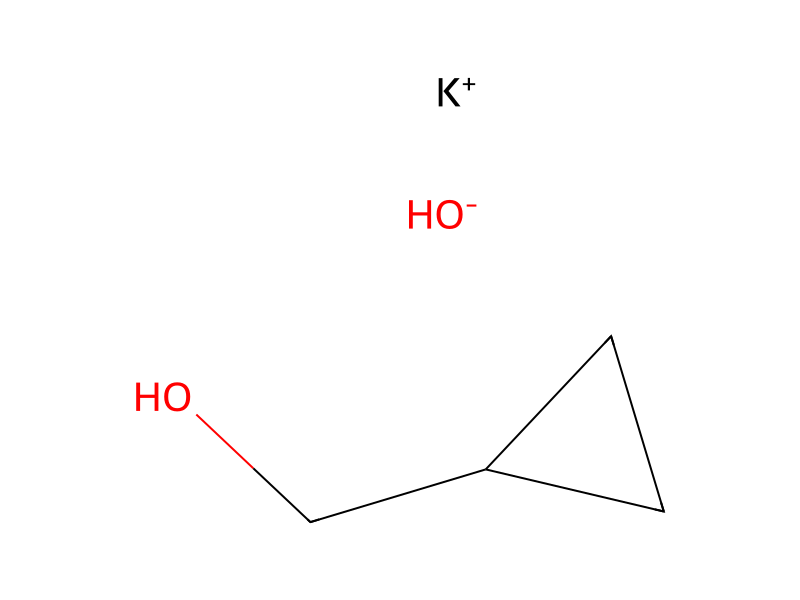
To a solution of 4-(5-methyl-1,3,4-oxadiazol-2-yl)benzaldehyde (5.3 g, 27.7 mmol) in cyclopropylmethanol (25 mL) and anhydrous dioxane (25 mL) at 0° C. (bath temperature) was added several drops of a solution of KOH (7.77 g, 138.5 mmol) in cyclopropylmethanol (35 mL). Bromoform (3.1 mL, 35.2 mmol) was added, then the remaining KOH/cyclopropylmethanol solution was added over a period of 20 min. After stirring for 30 min, the reaction mixture was allowed to warm slowly to room temperature overnight then concentrated to dryness. After dissolving in a minimum amount of H2O, the residue was acidified to pH 1 with concentrated HCl. The aqueous mixture was extracted with EtOAc several times with the addition of brine to the aqueous layer during extraction. The combined organics were washed with brine, dried over Na2SO4 and concentrated in vacuo to give 2-(cyclopropylmethoxy)-2-(4-(5-methyl-1,3,4-oxadiazol-2-yl)phenyl)acetic acid as a semisolid which was then recyrstallized from Et2O (0.5 g, 7% yield).