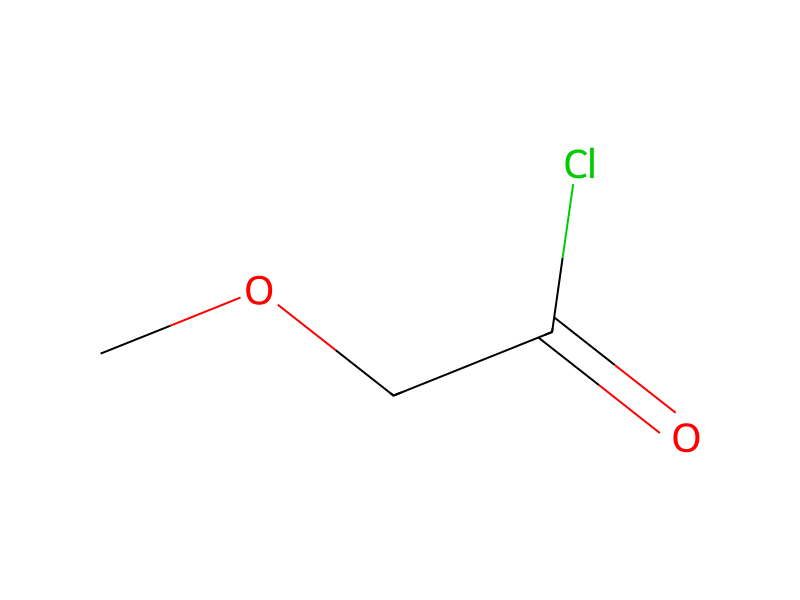
Methoxyacetyl chloride → tert-butyl N-[2-(2-methoxymethyl-1H-imidazo[4,5-c][1,5]naphthyridin-1-yl)ethyl]carbamate
HRID 1798860
Reaction equation

[CH3:1][O:2][CH2:3][C:4](Cl)=O.[NH2:7][C:8]1[CH:9]=[N:10][C:11]2[C:16]([C:17]=1[NH:18][CH2:19][CH2:20][NH:21][C:22](=[O:28])[O:23][C:24]([CH3:27])([CH3:26])[CH3:25])=[N:15][CH:14]=[CH:13][CH:12]=2>N1C=CC=CC=1>[CH3:1][O:2][CH2:3][C:4]1[N:18]([CH2:19][CH2:20][NH:21][C:22](=[O:28])[O:23][C:24]([CH3:25])([CH3:27])[CH3:26])[C:17]2[C:16]3[N:15]=[CH:14][CH:13]=[CH:12][C:11]=3[N:10]=[CH:9][C:8]=2[N:7]=1Participants
4



Procedure
Methoxyacetyl chloride (5.9 g, 54 mmol) was added dropwise to a chilled (ice bath) solution of tert-butyl N-{2-[(3-amino[1,5]naphthyridin-4-yl)amino]ethyl}carbamate (15.0 g, 49.5 mmol, U.S. Pat. No. 6,194,425, Example 87) in anhydrous pyridine (100 mL). The reaction mixture was heated at reflux until analysis by liquid chromatography/mass spectroscopy (LCMS) indicated that the reaction was complete. The reaction mixture was concentrated under reduced pressure. The residue was diluted with ethanol (100 mL), combined with potassium carbonate solution (200 mL of 2 M), and heated at reflux for 4 hours. The reaction mixture was cooled and then concentrated under reduced pressure. The residue was partitioned between water and dichloromethane. The aqueous layer was extracted with dichloromethane. The combined organics were dried over magnesium sulfate, filtered, and then concentrated under reduced pressure to provide 14 g of tert-butyl N-[2-(2-methoxymethyl-1H-imidazo[4,5-c][1,5]naphthyridin-1-yl)ethyl]carbamate.