1beta,2beta-Methylene-5-androstene-3beta,17beta-diol → 1beta,2beta-Methylene-4-androstene-3,17-dione
Reaction equation

[CH2:1]1[C@@H:3]2[C@H:4]([OH:22])[CH2:5][C:6]3[C@:19]([CH3:20])([C@H:2]12)[C@@H:18]1[C@H:9]([C@H:10]2[C@@:14]([CH2:16][CH2:17]1)([CH3:15])[C@@H:13]([OH:21])[CH2:12][CH2:11]2)[CH2:8][CH:7]=3.CC(C)=O.OS(O)(=O)=O.O=[Cr](=O)=O>CC(C)=O>[CH2:1]1[C@@H:3]2[C:4](=[O:22])[CH:5]=[C:6]3[C@:19]([CH3:20])([C@H:2]12)[C@@H:18]1[C@H:9]([C@H:10]2[C@@:14]([CH2:16][CH2:17]1)([CH3:15])[C:13](=[O:21])[CH2:12][CH2:11]2)[CH2:8][CH2:7]3Participants
4
Reactant 2

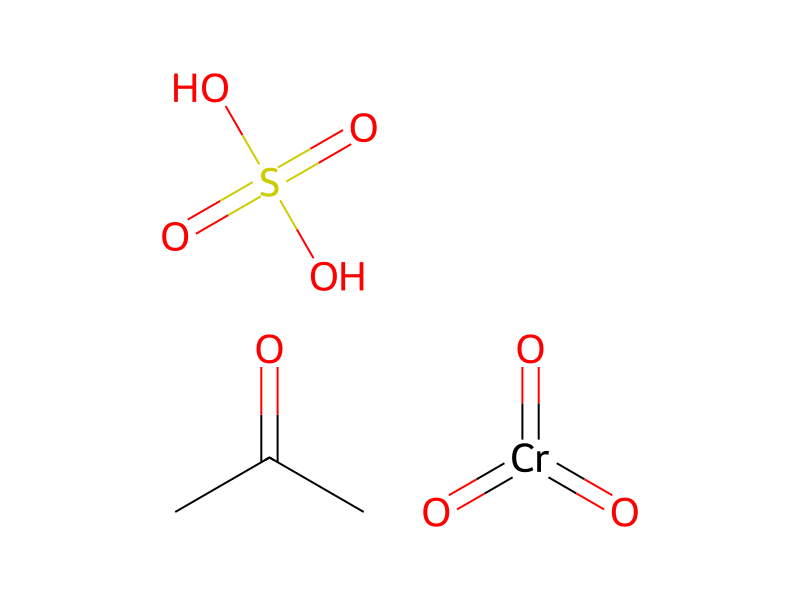
Product 1

Reagents, catalysts & solvents 1

Procedure
1β,2β-Methylene-5-androstene-3β,17β-diol is dissolved in acetone and Jones reagent is added until a persistent yellow orange color appears. After stirring at room temperature for 10 minutes the mixture is poured onto icewater. The precipitate is collected by filtration and dissolved in a solution of sodium methoxide in methanol. Stirring is continued for about 30 minutes at room temperature, the methanol is removed and the residue triturated with water. The solid is filtered and crystallized from acetone to yield 1β,2β-methylene-4-androstene-3,17-dione.