Boric Acid → Boric acid (HBO2), zinc salt (2:1)
HRID 1837192
Reaction equation

[B:1]([OH:4])([OH:3])[OH:2].[Zn:5]>O>[B:1]([O-:4])([O-:3])[O-:2].[Zn+2:5].[B:1]([O-:4])([O-:3])[O-:2].[Zn+2:5].[Zn+2:5]Participants
4
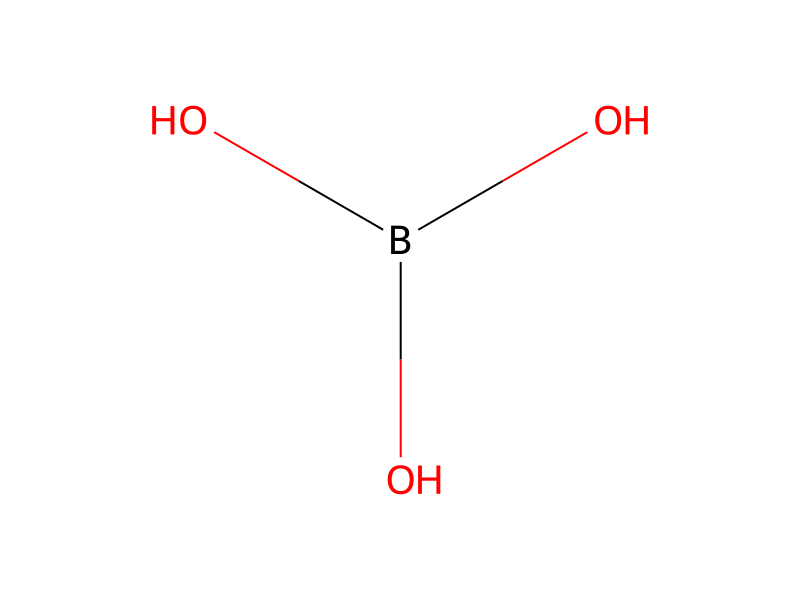

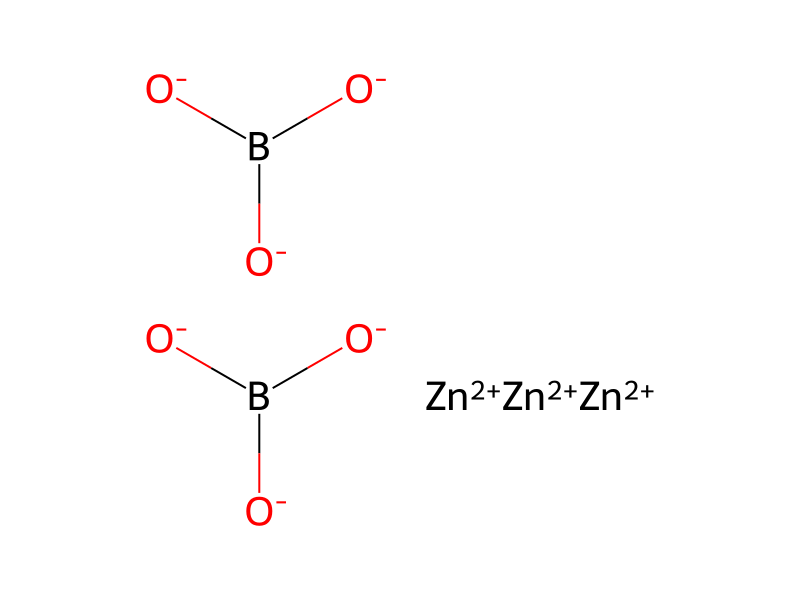
Reagents, catalysts & solvents 1

Procedure
An aqueous solution was prepared by dissolving 72.5 g of boric acid (B2O3 content of 56.3%) in 1000 ml of pure water. To the aqueous solution were added 95.7 g of a zinc flower (ZnO content of 99.4%) and 217.5 g of boric acid (B2O3 content of 56.3%), and were stirred and mixed together such that the molar ratio of B2O3/ZnO was 2.0. Next, the solution was stirred and reacted at 60° C. for 120 minutes. The solution was further stirred and reacted at 85° C. for 6 hours. The obtained product was filtered, washed with water and was, then, dried at 105° C. to obtain a zinc borate (sample A-5). Table 3 shows the chemical composition and properties of the thus obtained zinc borate (sample A-5), FIG. 10 shows an X-ray diffraction image thereof, and FIG. 11 shows an electron microphotograph thereof.