Reaction equation

[F:1][C:2]1[C:15]([F:16])=[C:14]([F:17])[C:13]([F:18])=[CH:12][C:3]=1[C:4]([CH2:6][C:7]([O:9][CH2:10][CH3:11])=[O:8])=[O:5].[CH3:19]C(OCC1C2C(=CC=CC=2)C(COC(C)=O)=C2C=1C=CC=C2)=O.C(OC(OCC)OCC)C.C(OC(=O)C)(=O)C.Cl.[NH2:61][C:62]1[C:71]2[C:66](=[CH:67][CH:68]=[CH:69][CH:70]=2)[CH:65]=[CH:64][C:63]=1[OH:72]>ClCCl.N1C=CC=CC=1>[OH:72][C:63]1[CH:64]=[CH:65][C:66]2[C:71](=[CH:70][CH:69]=[CH:68][CH:67]=2)[C:62]=1[NH:61][CH:19]=[C:6]([C:4]([C:3]1[CH:12]=[C:13]([F:18])[C:14]([F:17])=[C:15]([F:16])[C:2]=1[F:1])=[O:5])[C:7]([O:9][CH2:10][CH3:11])=[O:8]Participants
Reactant 5

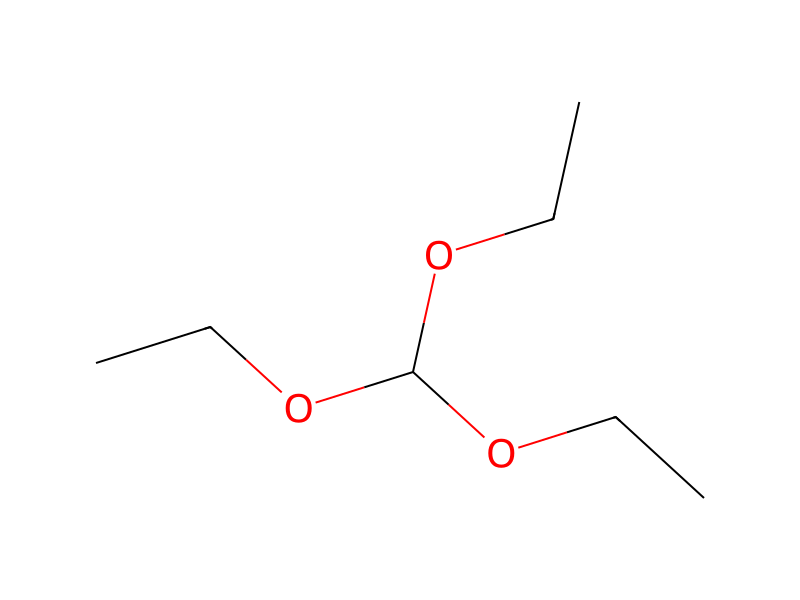


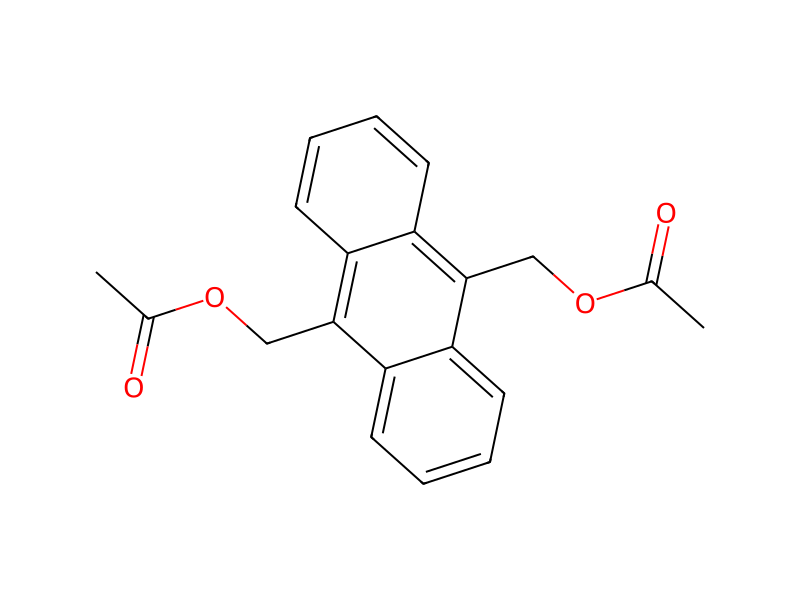
Product 1

Reagents, catalysts & solvents 2


Conditions
- Temperature
- 130 °C
Procedure
Ethyl 2,3,4,5-tetrafluorobenzoylacetate was treated with triethyl orthofomate and acetic anhydrate, then with different aminonaphthols in the presence of pyridine to generate an aminoketoacid. The solution of ethyl 2,3,4,5-tetrafluorobenzoylacetate (1.10 g, 4.18 mmol) in triethylorthoformate (1 ml, 6.06 mmol) and acetic anhydride (1.8 ml, 19 mmol) was heated and stirred at 130° C. for 4 h. During the process, the formed ethyl acetate was removed. The mixture was then distilled under vacuum to yield an orange oil, which was dissolved in 30 ml dichloromethane. 1-aminonaphthalen-2-ol hydrogen chloride (90% pure from Aldrich) (1.36 g, 6.26 mmol), premixed with 2 equivalent of pyridine, was added to the dichloromethane solution, and the mixture was stirred overnight at 22° C. After the solvent was removed under reduced pressure, the remaining residue was absorbed on silica gel and subjected to flash column chromatography (gradient ethylacetate:hexanes=8:4) that yield a bright yellow powder (1.69 g). Yield=93%. 1H NMR (CDCl3) δ 1.02 (t, J=7.2 Hz, 3H), 4.01 (q, J=7.2 Hz, 2H), 4.10 (m, 1H), 7.34 (d, J=9.0 Hz, 1H), 7.41 (m, 1H), 7.60 (m, 2H), 7.82 (8, 2H), 7.91 (d, J=8.1 Hz, 1H), 8.54 (b, 1H).
Workup
- customDuring the process, the formed ethyl acetate was removed
- distillationThe mixture was then distilled under vacuum
- customto yield an orange oil, which
- stirringthe mixture was stirred overnight at 22° C
- customAfter the solvent was removed under reduced pressure
- customthe remaining residue was absorbed on silica gel
Sources & evidence
- ORD record
- ord-90f4cdb0eb8140d2bacc64d5a78b5d63
- Source dataset
- uspto-grants-2003_03
- Patent number
- US06528517B1
Linked notes
Loading…